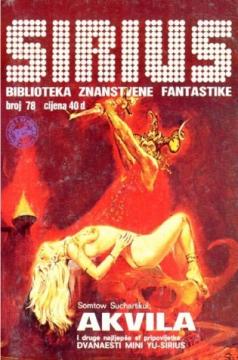
Sirius: Biblioteka znanstvene fantastike - broj 78
S. P. Somtow, Biljana Mateljan, Željko Golubović, Živko Prodanović, Aleksandar B. Nedeljković, Goran Stanković, Igor Borić, Vladimir Lazović, Slobodan Petrović, Vladimir Janković, Veronika Santo, Predrag Raos, D. Jović, Edward Grendon, Rachel Pollack, Fred Saberhagen, Brian W. Aldiss, Vladimir Rybin, Dannie Plachta
Sirius was a Croatian science fiction magazine. The foundation was proposed by Damir Mikuličić in 1976. In Sirius, the works of domestic authors, as well as translations of foreign SF authors, were published. It was published from 1976 to 1989.
Translation
Žarko Vodinelić, Zoran Milović, Božidar Stančić, Ivan Paprika, Bruno Ogorelec
Mikhail Pukhov, Tom Godwin, Henry Slesar, Gerald Kersh, Damir Bajs, Arthur C. Clarke, Borivoje To...
Sirius was a Croatian science fiction magazine. The foundation was proposed by Damir Mikuličić in 1976. In Sirius, the works of domestic authors, as well as translations of foreign SF authors, were published. It was published from 1976 to 1989.
Vjesnik, 1983.
Croatian. Latin alphabet. Paperback.
3.24 - 3.46 €
Novel • American literature • Science Fiction
"Star Wars: The New Rebellion" is a stand-alone work within the Star Wars Expanded Universe (now known as Legends), set in the New Republic era, approximately 17 years after the events of Return of the Jedi (Battle of Yavin).
A. E. Van Vogt, Gradimir J. Moskovljević, Diana Nemanja, H. B. Fyfe, Ray Bradbury, Murray Leinste...
Sirius was a Croatian science fiction magazine. The foundation was proposed by Damir Mikuličić in 1976. In Sirius, the works of domestic authors were published, as well as translations of foreign SF authors. It was published from 1976 to 1989.
Bill Johnson, Susan Wade, Geoffrey A. Landiss, Goran Konvični, James Patrick Kelly
Futura magazine was a Croatian magazine for speculative fiction, primarily for science fiction literature. The first issue of Futura was published in October 1992.
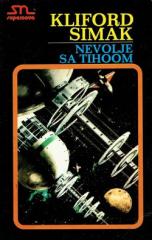
The novel Nevolje sa Tiho was originally published in 1961 and in a sense marks the end of the first phase of Simak's creativity - namely, the one dominated by the "space opera" tradition.
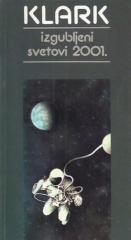
The book is a genre of popular science literature with elements of technological vision and futurism, characteristic of the era in which it was created – the time of the Cold War, the space race, and great expectations from science.