
Hrvatska moderna povijest
Editor
Radule Knežević
Dimensions
25 x 17 cm
Publisher
Golden marketing, Zagreb, 1999.
Latin alphabet. Hardcover.
Language: Croatian.
ISBN
978-9-53616-850-7
No copies available
The last copy was sold recently.
No copies available
The last copy was sold recently.
Are you interested in another book? You can search the offer using our search engine or browse books by category.
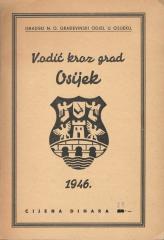
An important document reflecting the state of the city immediately after World War II. The guide served as a practical tool for orientation and informing citizens and visitors about the urban layout and infrastructure of the city at that time.
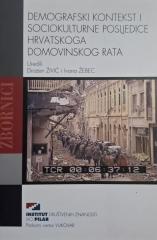
The authors pointed out the demographic situation in Croatia in the late 1980s and early 1990s, the demographic trends in the war-affected areas of Croatia, the demographic war losses and the long-term demographic consequences of the war.
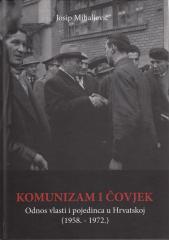
Josip Mihaljević's book analyzes the relationship between the government and the individual in communist Croatia (1958–1972), through repressive mechanisms, ideological pressures, and restrictions on personal freedom in the socialist system.

A pioneering attempt at a systematic presentation of Croatian political history from the settlement of Croats to the conclusion of a personal union with Hungary. Segher chronologically traces the development of Croatian statehood, relying on the sources a
Fashion and customs, institutions and societies, Split theater, carnivals, Trogir and something about Trogir.
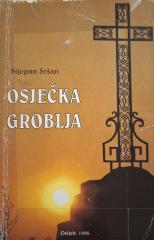
The book is deeply rooted in the local history and culture of Osijek, with an emphasis on cemetery motifs that serve as a metaphor for memory, death, and disappearance.