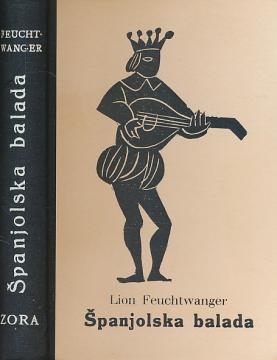
Španjolska balada
A touching novel about the history of Judaism, but also on the edge of Muslim culture.
The main protagonists of the novel are the Jewish merchant Jehuda Ibn Esra and his daughter Raquel in Spain in the 12th century. Many Jews in Andalusia had to accept the Muslim faith if they did not want to emigrate; so did Ibrahim, a rich merchant from Seville. When, at the age of 55, he is given an opportunity to return to his old faith, he abandons his secure position as the emir's adviser and, although he is aware that the Jews in Christian Spain are both religiously and politically ostracized, he proclaims himself under his fathers name and surname as Yehuda Ibn Esra in in the service of King Alfonso of Castile. He is forced to agree to a cease-fire by treaties, but despite this, he prepares a new war against the Emir of Seville. Jehuda believes that, as a fundraiser and royal advisor, she can dampen his desire for war. The country's economy, which has been in decline since Alfonso's last defeat against the Emir, is booming again thanks to Yehuda's rule. Alfonso rebuilt his palace La Galiana in the Moorish style. During the last inspection with Jehuda, he orders Raquel, Jehuda's daughter, to live there as his concubine in the future. Judah is faced with the choice of either complying with the king's wishes or fleeing with his family. Raquel encourages him in his decision to stay. In the following period, King Alfonso becomes completely enchanted by Raquel. He lives in seclusion with her in Galiana and forgets his wife Eleonor during this love adventure. She, the daughter of King Henry II of England, would rather see her husband in the field so that he forgets the Jew. Supported by the Christian pope and his vicar, the local bishop, who called for a new crusade against the infidels, she succeeds in forcing the king, who was already ready for war, into war. But the Christian knights don't stand a chance against the massive Muslim army. Rumors soon spread that the Jews had revealed Christian war plans to the Muslims. Yehuda and his daughter were killed - by order of the queen.
No copies available
The last copy was sold recently.