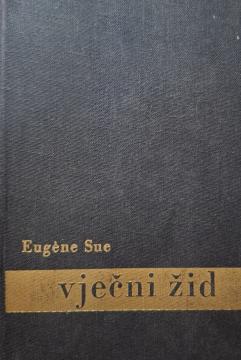
Vječni žid

Vječni žid

Eugene Sue

„Der ewige Jude“ (französisch: „Le Juif errant“) ist ein Roman von Eugène Sue, der erstmals 1844 veröffentlicht wurde.

Die Geschichte spielt in Europa und verfolgt das Schicksal Israels, einer unauslöschlichen Figur, die das Leid und die Verfolgung der Juden im Laufe der Geschichte symbolisiert. Die Hauptfigur Mattathias trägt die Last ewiger Verdammnis und des Exils, reist durch verschiedene Länder und Epochen und ist Vorurteilen und Missbrauch ausgesetzt.

Im Verlauf der Reise erkundet der Roman Themen wie Identität, Religion und soziale Gerechtigkeit und beleuchtet die Nöte, mit denen die Juden konfrontiert sind, aber auch ihre Widerstandskraft und Überlebensfähigkeit. In dieser Rolle kritisiert Sue soziale Ungerechtigkeiten, hebt universelle menschliche Werte hervor und ruft zu Toleranz und Verständnis zwischen den Völkern auf. Durch seine eindringlichen Beschreibungen und seine emotionale Erzählung hinterlässt „Der ewige Jude“ einen starken Eindruck über die Bedeutung des Zusammenlebens und der Menschenrechte.

Original title
Le Juif errant
Translation
Ivo Klarić
Dimensions
20 x 13 cm
Pages
385
Publisher
Matica hrvatska, Zagreb, 1969.
 
Latin alphabet. Hardcover.
Language: Croatian.

One copy is available

Condition:Used, excellent condition
 

Are you interested in another book? You can search the offer using our search engine or browse books by category.

You may also be interested in these titles

Fatal Cure

Fatal Cure

Robin Cook
G. P. Putnam's Sons, 1993.
English. Latin alphabet. Hardcover with dust jacket.
10.428.34
Monstrum

Monstrum

Donald James
Algoritam, 2001.
Croatian. Latin alphabet. Hardcover.
7.56
I Jimmy se približava dugi 1-2

I Jimmy se približava dugi 1-2

Johannes Mario Simmel

A political and psychological drama set in Vienna between 1938 and 1969. Although inspired by real events from the West German metropolis between 1934 and 1965, the author changed the time and place of the action to protect the identities of real people.

Mladost, 1977.
Croatian. Latin alphabet. Hardcover with dust jacket.
The book consists of two volumes
6.74 - 8.64
Dinamit: Povijest klasnog nasilja u Americi

Dinamit: Povijest klasnog nasilja u Americi

Louis Adamić

Knjiga dokumentarno prikazuje stoljeće nasilja u američkom radničkom pokretu — od rudarskih štrajkova 19. stoljeća, preko bombaških napada, do sukoba s policijom te razotkriva surovu pozadinu američkog „klasnog rata“.

Naklada Binoza, 1933.
Croatian. Latin alphabet. Hardcover with dust jacket.
7.245.79
Pisma Cosimu I. Mediciju 1566.

Pisma Cosimu I. Mediciju 1566.

Marin Držić

Držić's letters to Cosimo I de' Medici represent a significant document of Croatian Renaissance literature and history. Držić sent three letters to Cosimo I, Grand Duke of Tuscany, between June and August 1566, while he was staying in Florence.

Croatian P.E.N. Centre & Most / The Bridge, 1993.
Croatian. Latin alphabet. Paperback.
8.32
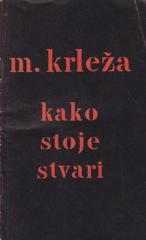
Kako stoje stvari: Predavanje održano u Domu JNA u Zagrebu 17. 12. 1952.

Kako stoje stvari: Predavanje održano u Domu JNA u Zagrebu 17. 12. 1952.

Miroslav Krleža

In his lecture How Things Are (1952), Krleža discusses the political and cultural situation of post-war Yugoslavia, emphasizing the need for critical thought, cultural renewal, and resistance to dogmatism.

Zora, 1953.
Croatian. Latin alphabet. Paperback.
12.48