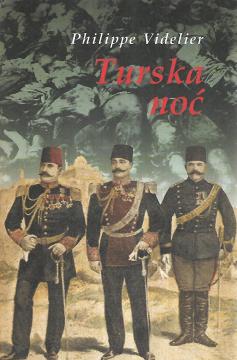
Turska noć

Turska noć

Philippe Videlier

The crime against the Armenians is only coming to light today. After almost a century, the tragedy of a nation, the indifference of the Constantinople authorities, the media cover-up and the turning of the international community's head are unfolding befo

French writer and historian Philippe Videlier tells the story of the crimes against the Armenian people, which took place in Turkey at the end of the 19th and the beginning of the 20th century. About one and a half million Armenians were executed in the genocide, the international community knew about the facts but did not react. Videlier's story, concise and sharp, is based on the sources he came across.

Philippe Videlier is an exceptional storyteller; what he found in the sources he narrated succinctly, sharply and excitingly. Therefore, his book, before the pocket edition, was published in the world's most famous literary library, Gallimard's "white series". And Annie Pilibossian wrote in the Le Figaro newspaper: "It is a poignant report, rich in testimonies from the time, about the fate of the Armenian people under the auspices of the Ottoman Empire from the end of the 19th and the beginning of the 20th century." An incredible lesson for future generations."

Original title
Nuit turque
Translation
Yves-Alexandre Tripković
Editor
Nenad Popović
Dimensions
21 x 14 cm
Pages
103
Publisher
Durieux, Zagreb, 2010.
 
Latin alphabet. Hardcover with dust jacket.
Language: Croatian.
ISBN
978-9-53188-313-9

One copy is available

Condition:Used, excellent condition
Discounted price: 11.428.57
25% discount is valid until 6/12/26 11:59 pm
 

Are you interested in another book? You can search the offer using our search engine or browse books by category.

You may also be interested in these titles

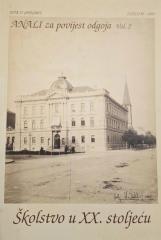
Školstvo u XX. stoljeću

Školstvo u XX. stoljeću

The collection "Education in the 20th Century", published in 2003 in Annals for the History of Education (vol. 2), contains papers from the professional-scientific meeting in Zagreb (October 25-27, 2001), held on the occasion of the 100th anniversary of t

Hrvatski školski muzej, 2003.
Croatian. Latin alphabet. Paperback.
5.98
Nevidljivi neprijatelj na Atlantiku 1-2

Nevidljivi neprijatelj na Atlantiku 1-2

Boris Prikril

The book provides a detailed account of naval conflicts in the Atlantic Ocean during World War II, with particular emphasis on the Battle of the Atlantic Convoy and the activities of German submarines – the so-called "invisible enemy".

Znanje, 1985.
Croatian. Latin alphabet. Hardcover with dust jacket.
The book consists of two volumes
6.98
Razgovor s poviješću

Razgovor s poviješću

Oriana Fallaci

A Conversation with History is not just a collection of interviews, but also a reflection on history, politics, and human nature. The book exposes the complexities of powerful people and their influence on the world, making it a must-read for history and

August Cesarec, 1979.
Croatian. Latin alphabet. Hardcover with dust jacket.
11.268.45
Dizanje prošlosti u vazduh: Ogledi o Balkanu i Istočnoj Evropi

Dizanje prošlosti u vazduh: Ogledi o Balkanu i Istočnoj Evropi

Marija Todorova

A collection of essays by the Bulgarian historian Maria Todorova (known for Imaginary Balkans), compiled especially for the 20th Century Library. Indispensable for understanding post-communist transitions, culture of memory and Balkan studies.

Biblioteka XX vek, 2010.
Serbian. Latin alphabet. Paperback.
8.44
Snažan eho brionski: Odjeci Brionskog plenuma u Bosni i Hercegovini 1966. godine

Snažan eho brionski: Odjeci Brionskog plenuma u Bosni i Hercegovini 1966. godine

Amir Duranović

Amir Duranović's book reconstructs in detail the dramatic year 1966 and the Fourth (Brion) Session of the Central Committee of the Communist Party of Yugoslavia (July 1–2, 1966), at which Aleksandar Ranković, the long-time head of the UDB and vice preside

Udruženje za modernu historiju (UMHIS), 2017.
Croatian. Latin alphabet. Paperback.
9.54
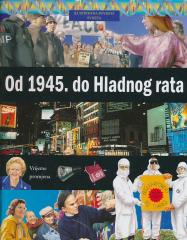
Ilustrirana povijest svijeta: Od 1945. do Hladnog rata

Ilustrirana povijest svijeta: Od 1945. do Hladnog rata

Neil Morris

The book explains how, after 1945, the world was divided into two opposing blocs: the Western (led by the USA) and the Eastern (led by the Soviet Union).

24 sata, 2011.
Croatian. Latin alphabet. Hardcover.
5.00