Primicanje katastrofa: Propasti koje prijete našem svijetu

Primicanje katastrofa: Propasti koje prijete našem svijetu

Isaac Asimov

A popular science work in which Asimov, combining scientific rigor with a lucid style, explores possible threats to the survival of humanity, systematizing disasters according to their nature and probability.

Asimov divides disasters into five categories. The first covers cosmic threats, such as asteroid impacts or changes in solar activity. The second deals with planetary disasters, including volcanic eruptions, earthquakes, and climate change. The third category focuses on biological threats, such as pandemics or genetic mutations. The fourth explores societal collapses, including wars, economic crises, and political instability. The fifth concerns technological risks, such as nuclear war or the misuse of artificial intelligence.

The book not only analyzes the causes and consequences of these disasters, but also considers how humanity can prevent or mitigate them. Asimov emphasizes the importance of science, education, and global cooperation in dealing with the threats. Although sometimes pessimistic, he remains optimistic about the human capacity to adapt and innovate. His descriptions are based on scientific data available in the 1970s, but many of the insights remain relevant, especially in the context of climate change and technological risks. The book has been praised for its clarity and comprehensiveness, although it has been criticized for its occasional overbroad approach.

Original title
A Choice of Catastrophes
Translation
Dunja Vražić-Stjeskal
Editor
Zdravko Židovec
Graphics design
Nenad Dogan
Dimensions
20 x 14 cm
Pages
352
Publisher
August Cesarec, Zagreb, 1981.
 
Latin alphabet. Hardcover with dust jacket.
Language: Croatian.

One copy is available

Condition:Used, excellent condition
Discounted price: 7.465.60
25% discount is valid until 3/10/26 11:59 pm
 

Are you interested in another book? You can search the offer using our search engine or browse books by category.

You may also be interested in these titles

Roboti zore

Roboti zore

Isaac Asimov
Samizdat, 1985.
Serbian. Latin alphabet. Paperback with dust jacket.
10.36
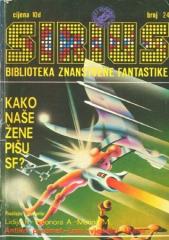
Sirius: Biblioteka znanstvene fantastike - broj 24

Sirius: Biblioteka znanstvene fantastike - broj 24

Lidija Razumović, Marina Mihaljević, Eleonora Akrap, Frank Herbert, Rog Phillips, Goran Pavelić, ...

Sirius was a Croatian science fiction magazine. The foundation was proposed by Damir Mikuličić in 1976. In Sirius, the works of domestic authors, as well as translations of foreign SF authors, were published. It was published from 1976 to 1989.

Vjesnik, 1978.
Croatian. Latin alphabet. Paperback.
3.48
Sirius: Biblioteka znanstvene fantastike - broj 31

Sirius: Biblioteka znanstvene fantastike - broj 31

Radivoj Papić, Terry Carr, A. E. Van Vogt, István Kaszás, Ray Russell, T. P. Caravan, Ray Bradbur...

Sirius was a Croatian science fiction magazine. The foundation was proposed by Damir Mikuličić in 1976. In Sirius, the works of domestic authors, as well as translations of foreign SF authors, were published. It was published from 1976 to 1989.

Vjesnik, 1979.
Croatian. Latin alphabet. Paperback.
3.48
Star Wars: Nova pobuna

Star Wars: Nova pobuna

Kristine Kathryn Rusch

"Star Wars: The New Rebellion" is a stand-alone work within the Star Wars Expanded Universe (now known as Legends), set in the New Republic era, approximately 17 years after the events of Return of the Jedi (Battle of Yavin).

Neobična naklada, 2003.
Croatian. Latin alphabet. Paperback.
21.36
Četrdeset tisuća milja ispod mora

Četrdeset tisuća milja ispod mora

Jules Verne

The novel Forty Thousand Leagues Under the Sea (also known as Twenty Thousand Leagues Under the Sea, depending on the translation), published in 1870, is one of Jules Verne's most famous works and a classic of science fiction.

Novo pokoljenje, 1951.
Croatian. Latin alphabet. Hardcover with dust jacket.
8.56
Digitalni ugljik

Digitalni ugljik

Richard Morgan

The first part of a trilogy about Takeshi Kovacs – a dark, violent, but intellectually provocative SF noir. The world of the future in Morgan's Digital Carbon is a cruel extrapolation of globalization, but at its core it is a classic noir crime novel.

Algoritam, 2006.
Croatian. Latin alphabet. Hardcover.
19.52