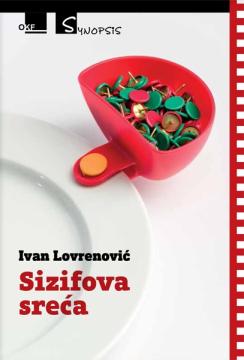
Sizifova sreća - razgovori, kronike

Sizifova sreća - razgovori, kronike

Ivan Lovrenović

Ivan Lovrenović's collection documents thirty years of change in Bosnia and Herzegovina through interviews, essays, and dialogues. The author, a witness to the era, examines old attitudes in the new reality, emphasizing the atrophy of rationality and soci

The book, divided into four parts, exudes resignation, suspicion and self-irony, criticizing ideologies, nationalisms and historical ruptures without being apodictic.

Part One: We are powerful in evil. Six interviews (1989–2018) on war, genocide, nationalism and culture. Lovrenović discusses Sarajevo, the divisions of Herzegovina, the role of intellectuals and the media in propaganda, highlighting the "power of evil" in the Yugoslav breakup.

Part Two: The Land of Cemeteries. Chronicles from 2015–2016, short essays on the Bosnian past: "The Legend of Enver Čolaković", "Two Herzegovinian Croats", "God-Seekers Thirsting for Violence", "Milorad Ekmečić: 'We Look at the Future Through Darkness'", "The War for Language", "The Fake Writer Meša Selimović", "Serbian Mostar", "Sarajevo – a Muslim City?", "Radovan Karadžić's Peaceful Conscience". Focus on memory, crimes and identity.

Part Three: Dialogue. A conversation with Enver Kazaz (2009), inspired by Roger Bacon: "The soul cannot rest in truth until the body is burned in the fire of experience". A profound discussion of literature, history and ethics in the post-Yugoslav chaos. Part Four: Contributions. Texts by other authors and Lovrenović's comments that complement previous topics, such as analyses of genocide and cultural taboos.

The book as a Sisyphean task: pushing the stone of truth uphill again, celebrating happiness in the futility of resistance to evil.

Dimensions
20 x 14 cm
Pages
383
Publisher
Synopsis, Sarajevo, 2018.
 
Latin alphabet. Paperback.
Language: Croatian.
ISBN
978-9-94036-082-5

One copy is available

Condition:Used, excellent condition
 

Are you interested in another book? You can search the offer using our search engine or browse books by category.

You may also be interested in these titles

Franjevci Bosne i Hercegovine na raskršću kultura i civilizacija

Franjevci Bosne i Hercegovine na raskršću kultura i civilizacija

Đuro Basler, Jelena Ivoš, Ljubo Jandrić, Ivan Lovrenović, Marko Oršolić, Svetlana Rakić
Muzej MTM, 1988.
Croatian. Latin alphabet. Paperback.
13.67
U sjeni fantoma

U sjeni fantoma

Ivan Lovrenović

In the shadow of the phantom is a real intellectual pleasure and belongs to the group of the greatest literary achievements in the South Slavic language area. Such novels cannot even be created all at once, but are created over decades, and as the author

Bodoni, 2023.
Croatian. Latin alphabet. Hardcover with dust jacket.
19.56
Kako što nastaje: novine, film, teatar

Kako što nastaje: novine, film, teatar

Karel Čapek

In a witty and instructive essay, Čapek describes how a newspaper, a film, and a theater play are created. Through humor and irony, he shows the complexity of the process – from idea to realization – and the different perspectives of the participants, dem

Znanje, 1985.
Croatian. Latin alphabet. Paperback.
4.76
Sol, ovce i kamenje

Sol, ovce i kamenje

Magdaléna Platzová

A fresh, uninhibited literary view of Dalmatia. Four stories about Dalmatia told in the manner of the best pages of Czech literature. Bringing to life the scents of salt and sea, the author writes vivid prose full of color and flavor.

Fraktura, 2006.
Croatian. Latin alphabet. Paperback.
8.54
Po-etika, knjiga druga

Po-etika, knjiga druga

Danilo Kiš

A collection of interviews that complements the first book of essays from 1972. As a lecturer in Serbo-Croatian at the University of Bordeaux, Kiš reveals in conversations the core of his "po-ethics" - a morally and aesthetically charged vision of literat

Ideje, 1974.
Serbian. Latin alphabet. Paperback.
8.56
Dunav: P.S. 1991. vukovarske razglednice

Dunav: P.S. 1991. vukovarske razglednice

Pavao Pavličić

A moving and poignant chronicle of the siege and destruction of Vukovar in 1991 through 57 short "postcard" chapters. Pavličić does not write from the perspective of an "ordinary" Zagreb resident who spent the summer of 1991 in Vukovar, and then followed

Hena Com, 1999.
Croatian. Latin alphabet. Hardcover.
11.26