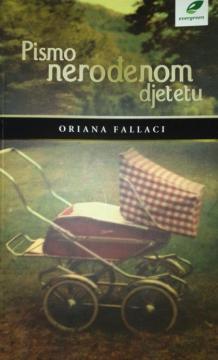
Pismo nerođenom djetetu

Pismo nerođenom djetetu

Oriana Fallaci

One of the most moving and courageous works of world literature of the 20th century. Written as a long monologue by a pregnant woman (Fallaci herself), the book is at once an intimate confession, a feminist manifesto, and a philosophical confrontation wit

The heroine is an independent, world-famous journalist who accidentally becomes pregnant. Instead of joy, she feels fear, anger, and rebellion: will the child be a “parasite” that will steal her freedom, career, and identity? In nightly conversations with the child in her womb, she begs him to decide for himself whether to be born or not – because she cannot make the decision herself. She questions patriarchal lies about the “sacred duty” of motherhood, a woman’s right to her body, fear of responsibility, but also the deep love that is born against her will.

The book culminates in a real tragedy – the miscarriage of pregnancy. The last pages are the cry of a mother who realizes that she did want the child, but too late. Fallaci offers no consolation or moralizes; her language is raw, poetic, and ruthless. The work caused a worldwide scandal in 1975, was banned, and the author was called out by both feminists and the Church. Today it is considered a classic of feminist literature and one of the most poignant testimonies about women's freedom and the price it pays.

Original title
Lettera a un bambino mai nato
Translation
Ladislav Grakalić
Editor
Davor Usoković
Dimensions
20.5 x 12.5 cm
Pages
114
Publisher
Znanje, Zagreb, 2009.
 
Latin alphabet. Paperback.
Language: Croatian.
ISBN
978-9-53195-758-8

One copy is available

Condition:Unused
 

Are you interested in another book? You can search the offer using our search engine or browse books by category.

You may also be interested in these titles

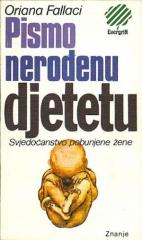
Pismo nerođenu djetetu: Svjedočanstvo pobunjene žene

Pismo nerođenu djetetu: Svjedočanstvo pobunjene žene

Oriana Fallaci

The touching and painfully honest dialogue of a mother with her unborn child, written by the famous Italian journalist and writer Oriana Fallaci, has been delighting generations of readers around the world for decades.

Znanje, 1980.
Croatian. Latin alphabet. Paperback.
4.26
Novi svet: Lik stvari koje dolaze

Novi svet: Lik stvari koje dolaze

Herbert George Wells
Narodno delo, 1931.
Serbian. Cyrillic alphabet. Hardcover.
19.99
Snaga stvari

Snaga stvari

Simone de Beauvoir
Mladost, 1966.
Croatian. Latin alphabet. Hardcover with dust jacket.
6.74 - 8.96
Rani dani - Kako smo odrastali uz filmove i televiziju

Rani dani - Kako smo odrastali uz filmove i televiziju

Goran Tribuson

In seinem autobiografischen Roman „Frühe Tage“ (1997) schildert Goran Tribuson Bjelovars Kindheit und Jugend durch die Linse von Film und Fernsehen. Eine außerordentlich humorvolle Geschichte über den Alltag in den 1960er-Jahren.

Znanje, 1997.
Croatian. Latin alphabet. Paperback.
8.24
Mijenjanje

Mijenjanje

Liv Ullmann

Liv Ullmanns Film „Changing“ beleuchtet eine bemerkenswerte Lebensveränderung – vom kleinen Mädchen aus Norwegen zur weltberühmten Schauspielerin. Im Laufe ihres Lebens wird sie in den wichtigsten Bereichen immer selbstbewusster – leidenschaftlich in ihre

Otokar Keršovani, 1980.
Croatian. Latin alphabet. Hardcover with dust jacket.
4.26
Knjiga za Maju: improvizacija na duši

Knjiga za Maju: improvizacija na duši

Marko Tomaš

Tomas' Prosabuch über Unruhe, Zerfall und Versuche, die Wesen zu vereinen, also die Welt, die sich dem Autor beharrlich entzieht, von der Zeit der Nomaden, die keinen Halt schafften, bis zu der Zeit, in der Tugenden und Laster die Hierarchie und den moral

V.B.Z, 2023.
Croatian. Latin alphabet. Hardcover.
9.58