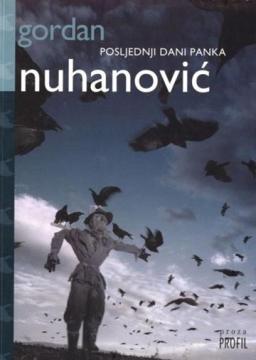
Posljednji dani panka
A generational novel set in the late 1990s, in provincial Croatia. The main character, a thirty-five-year-old journalist in a deep professional and existential crisis, returns from Zagreb to his hometown after years of working in sensationalist media.
Resigned, tired of fake news and emptiness, the main character tries to find meaning in old ideals. He joins a group of friends from his youth who are trying to revive the punk club "Mokra kifla" - a former haven of subculture, resistance and freedom from the 80s and early 90s. The club is now dilapidated, and the attempt to restore it becomes a symbolic fight against the new era: transitional misery, nationalism, commercialization, dullness and opportunism.
The novel follows a series of events around the club - band rehearsals, arguments, drinking, memories of the past, conflicts with local powerful people (representatives of the new order who stifle any trace of alternativeness). The hero faces the transience of youth, the betrayal of ideals, but also small moments of solidarity and rebellion. There is also an indirect love story - short relationships, nostalgia for what was lost.
Nuhanović writes ironically, self-ironically and critically: punk here is no longer a revolution, but the last breath of resistance in a world that has swallowed everything. The 1990s were portrayed as a masochistic, sneering era that destroyed a generation. The style is lively, conversational, with autobiographical touches – a mixture of bitterness, humor and tenderness towards the defeated.
The book is a farewell to the youth of a generation that believed in change, but ended up in apathy and provincial stagnation. It is a tragicomic portrait of the end of the subculture and the beginning of "normal" life in Croatia after the war and Tuđman.
One copy is available