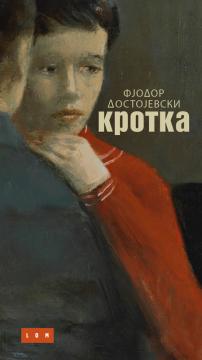
Pisma iz progonstva / Zimske beleške o letnjim utiscima / Krotka
Fyodor Dostoevsky, one of the greatest writers and visionaries in history, is presented in this edition with a selection from his correspondence (Letters from Exile), an account of his first trip to Europe (Winter Notes on Summer Impressions), and the fam
- Letters from Exile are selected letters from the period of Dostoevsky's exile (1849–1859): sentenced to death for the Petrashevists, pardoned, four years of hard labor in Omsk (Siberia), then military service. He wrote to his brother Mikhail, his wife, and friends – describing the fear of the firing squad, hard labor in chains, suffering, hunger, illness, but also a spiritual transformation: an encounter with the people's Russia, Christ, and faith. The letters are emotional, introspective, full of despair and hope – the key to understanding his later work (from "Notes from a Dead House" to great novels). They show how prison "reborn" his soul.
- Winter Notes on Summer Impressions (Зимние заметки о летних предприятиях, 1863) A satirical travel and philosophical essay after his first trip to Europe in 1862 (Berlin, Paris, London, Italy). Dostoevsky ridicules Western "progress": bourgeois materialism, selfishness, false equality, slavery to money ("everything is allowed if paid for"). He criticizes the French (Paris as "the most civilized", but full of prostitution and greed), the English (Crystal Palace as a symbol of utilitarianism), Germany (bureaucracy). Contrasts Russian "spiritual freedom" and brotherhood with Western individualism and "ant" society. A harbinger of his later Slavophilism, criticism of socialism and the "underworld".
- Meek (1876) is a poignant short story in the form of a monologue of a loan shark (41 years old) next to the body of his wife (16 years old) who threw herself out of the window. He narrates: he humiliated her out of pride and desire for power, kept silent for days, wanted to "subdue" her in order to "save" her. By the time he realizes love and tries to redeem himself - it's too late. She is "meek" out of pride, not weakness. Theme: destructive power of ideas, inability to communicate, guilt, suicide. An intense psychological drama about a man who destroys what he loves.
All three works show Dostoyevsky as a profound psychologist, critic of society and explorer of the soul - from the trauma of exile, through criticism of the West, to intimate tragedy.
Original title
Зимние заметки о летних впечатлениях / Кроткая
Translation
Mila Stojnić, Milosav Babović, Mila Mladenović
Editor
Flavio Rigonat
Graphics design
Ivan Anđelković
Dimensions
21.5 x 12 cm
Pages
183
Publisher
LOM, Beograd, 2012.
Cyrillic alphabet. Paperback.
Language: Serbian.
One copy is available
Condition:Used, excellent condition
Added to cart!