Pisma iz progonstva / Zimske beleške o letnjim utiscima / Krotka

Pisma iz progonstva / Zimske beleške o letnjim utiscima / Krotka

Fjodor Mihajlovič Dostojevski
Dostojevski

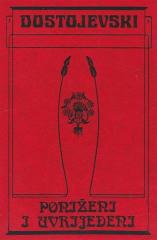
Fyodor Dostoevsky, one of the greatest writers and visionaries in history, is presented in this edition with a selection from his correspondence (Letters from Exile), an account of his first trip to Europe (Winter Notes on Summer Impressions), and the fam

  • Letters from Exile are selected letters from the period of Dostoevsky's exile (1849–1859): sentenced to death for the Petrashevists, pardoned, four years of hard labor in Omsk (Siberia), then military service. He wrote to his brother Mikhail, his wife, and friends – describing the fear of the firing squad, hard labor in chains, suffering, hunger, illness, but also a spiritual transformation: an encounter with the people's Russia, Christ, and faith. The letters are emotional, introspective, full of despair and hope – the key to understanding his later work (from "Notes from a Dead House" to great novels). They show how prison "reborn" his soul.
  • Winter Notes on Summer Impressions (Зимние заметки о летних предприятиях, 1863) A satirical travel and philosophical essay after his first trip to Europe in 1862 (Berlin, Paris, London, Italy). Dostoevsky ridicules Western "progress": bourgeois materialism, selfishness, false equality, slavery to money ("everything is allowed if paid for"). He criticizes the French (Paris as "the most civilized", but full of prostitution and greed), the English (Crystal Palace as a symbol of utilitarianism), Germany (bureaucracy). Contrasts Russian "spiritual freedom" and brotherhood with Western individualism and "ant" society. A harbinger of his later Slavophilism, criticism of socialism and the "underworld".
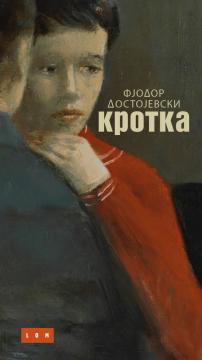
  • Meek (1876) is a poignant short story in the form of a monologue of a loan shark (41 years old) next to the body of his wife (16 years old) who threw herself out of the window. He narrates: he humiliated her out of pride and desire for power, kept silent for days, wanted to "subdue" her in order to "save" her. By the time he realizes love and tries to redeem himself - it's too late. She is "meek" out of pride, not weakness. Theme: destructive power of ideas, inability to communicate, guilt, suicide. An intense psychological drama about a man who destroys what he loves.

All three works show Dostoyevsky as a profound psychologist, critic of society and explorer of the soul - from the trauma of exile, through criticism of the West, to intimate tragedy.

Naslov izvornika
Зимние заметки о летних впечатлениях / Кроткая
Prijevod
Mila Stojnić, Milosav Babović, Mila Mladenović
Urednik
Flavio Rigonat
Naslovnica
Ivan Anđelković
Dimenzije
21,5 x 12 cm
Broj strana
183
Nakladnik
LOM, Beograd, 2012.
 
Ćirilica. Broširano.
Jezik: Srpski.

Jedan primjerak je u ponudi

Stanje:Korišteno, u odličnom stanju
Dodano u košaricu!

 

Zanima Vas i neka druga knjiga? Možete pretražiti našu ponudu pomoću tražilice ili prelistati knjige po kategorijama.

Možda će Vas zanimati i ovi naslovi

Braća Karamazovi

Braća Karamazovi

Dostojevski
Fjodor M. Dostojevski

The Brothers Karamazov is the last novel of the Russian genius Fyodor Mikhailovich Dostoyevsky, which he completed less than three months before his death.

Globus, 2004.
Hrvatski. Latinica. Tvrde korice.
12,34 - 12,38 €
Ujakov san / Poniženi i uvrijeđeni

Ujakov san / Poniženi i uvrijeđeni

Dostojevski
Fjodor M. Dostojevski

Two sides of Dostoevsky: a satire of marriage for social advancement and a moving novel of love, family conflict and humiliation. Provincial intrigue and suffering in Petersburg expose human vulnerability.

Znanje, 1982.
Hrvatski. Latinica. Tvrde korice.
13,26 €
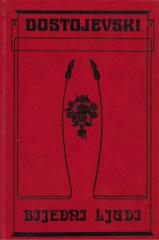
Bijedni ljudi / Dvojnik / Roman u devet pisama / Gospodin Proharčin / Gazdarica / Polzunkov / Slabo srce / Pošteni lopov / Božićno drvce i svadba / Tuđa žena i muž pod posteljom

Bijedni ljudi / Dvojnik / Roman u devet pisama / Gospodin Proharčin / Gazdarica / Polzunkov / Slabo srce / Pošteni lopov / Božićno drvce i svadba / Tuđa žena i muž pod posteljom

Dostojevski
Fjodor Mihajlovič Dostojevski

The early works demonstrate Dostoevsky's interest in psychology, social criticism, and moral dilemmas, laying the foundation for later masterpieces. At the end of the book, an appendix by Leonid Grossman: The most important dates in the life and work of F

Znanje, 1982.
Hrvatski. Latinica. Tvrde korice.
15,42 €
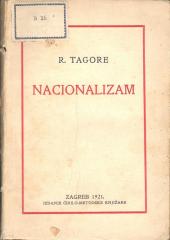
Nacionalizam

Nacionalizam

Tagore
Rabindranath Tagore

Rabindranath Tagore examines nationalism, the relationship between state and society, and the dangers of political power. A major work of humanist political thought, published in Zagreb in 1921.

Hrvatsko književno društvo sv. Ćirila i Metoda, 1921.
Hrvatski. Latinica. Broširano.
11,42 €
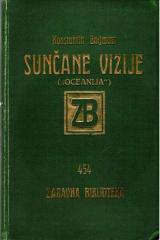
Sunčane vizije („Oceanija”): Pjesničke impresije iz Egipta, Japana, Mehika i Oceanije

Sunčane vizije („Oceanija”): Pjesničke impresije iz Egipta, Japana, Mehika i Oceanije

Konstantin Baljmont

Konstantin Balmont’s poetic travel writing explores Egypt, Japan, Mexico and Oceania, transforming landscapes, sea voyages and encounters with other cultures into reflections on beauty, myth and human life.

Naklada zaklade tiskare Narodnih novina, 1929.
Hrvatski. Latinica. Tvrde korice.
4,98 €
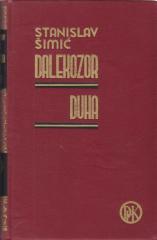
Dalekozor duha

Dalekozor duha

Stanislav Šimić

The 1937 collection of essays and critiques by Stanislav Šimić, *Dalekozor duha* ("The Binoculars of the Spirit"), presents incisive, polemical, and stylistically brilliant discussions on Croatian literature, culture, and artistic criteria.

Društvo hrvatskih književnika, 1937.
Hrvatski. Latinica. Tvrde korice.
9,256,48 €