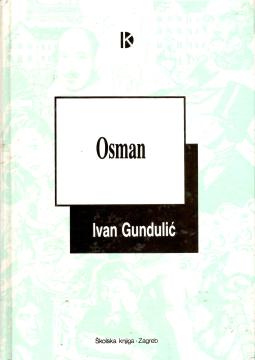
Osman
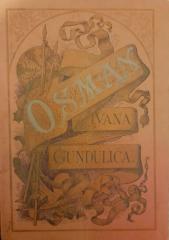
In the epic poem Osman Gundulić celebrates the victory of the Christian army in the Battle of Hotin (1621) and the downfall of Sultan Osman II. Through historical and allegorical motifs, the poet glorifies freedom, justice, and God's providence over human
Osman is the most famous epic poem by Ivan Gundulić, written in 20 cantos in Dubrovnik at the beginning of the 17th century. The work deals with a historical event – the defeat of the Turkish army in the Battle of Hotin in 1621, when the young Sultan Osman II. tried to expand the power of the Ottoman Empire, but suffered a setback due to his own arrogance and the discord of his soldiers.
At the heart of the poem is the conflict between good and evil, freedom and tyranny. Gundulić, imbued with a baroque Christian worldview, depicts the victory of God's justice over the powerful of this world. Osman, although powerful, becomes a victim of his own pride, while the Polish and Christian heroes represent courage, honesty and faith in God's will.
One of the most famous parts of the epic is a praise of freedom ("O liepa, o draga, o slatka slobodo"), in which the poet expresses a deep patriotic and moral message. In this poetic vision, freedom is not only a political, but also a spiritual value that makes a person truly human.
The epic is written in rhyming octaves, and is characterized by rich metaphors, baroque contrasts, rhythm, and a solemn style. Two cantos are lost, but even without them Osman remains a fundamental work of Croatian baroque literature and one of the most important national epics that combines historical themes with moral exaltation.
One copy is available