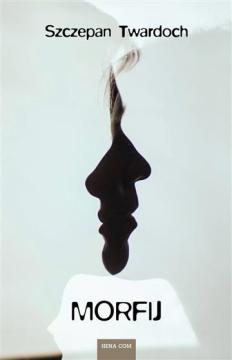
Morfij

Morfij

Szczepan Twardoch

Konstanty Willemann, a morphine addict and cynic torn between Polish and German identity, tries to survive September 1939 and the war, running away from history, his mother, women and himself.

Morphine (2012) is one of the most successful novels by the Polish (Silesian) writer Szczepan Twardoch. The plot follows the life of Konstanty Willemann, a thirty-year-old Warsaw native, a failed artist, bon vivant, womanizer, bad husband and father, and a morphine addict. He is the son of a Polonized Silesian woman, Katarzyna, and a German aristocrat, which makes him eternally torn between two nationalities and cultures.

The novel begins on the eve of and during the September campaign of 1939, when Germany invades Poland. Konstanty, a reserve officer, reluctantly participates in the war, and after the defeat is drawn into a secret resistance organization. But he does not believe in ideals – God, honor, homeland – for him, all of this is secondary to the next dose of morphine and the opportunity to continue his decadent, debauched life as a pre-war dandy. History, of course, does not let him go; the war pushes him into moral dilemmas, violence and chaos of occupied Warsaw.

Twardoch masterfully depicts the unstable identity of the protagonist: each woman in his life (nymphomaniac mother, wife, mistress) shapes him in a different way, just as history forces him to choose between Pole and German. The novel is radical, linguistically rich, manic and dark – a mix of historical fiction, psychological thriller and elements of magical realism. The protagonist is a classic anti-hero: repulsive, cynical, weak, but at the same time irresistible and very human.

The book demystifies the Polish national myth of heroism, showing the weakness, opportunism and chaos of war through the prism of one weak individual. At the same time, it is a universal story about the search for identity, addiction (not only chemical, but also to women, social roles and history) and the impossibility of escape from great events.

Morphine brought Twardoch great success (Paszport Polityki Award, and other nominations), was translated into several languages ​​and is considered one of the most powerful Polish novels about World War II. In the Croatian translation by Emil Nuić it retained its raw power and became notable in the region. An ideal read for lovers of intense, unpleasant and stylistically virtuosic prose.

Original title
Morfina
Translation
Emilio Nuić
Editor
Marina Negotić
Graphics design
Jasna Goreta
Dimensions
21.5 x 14 cm
Pages
568
Publisher
Hena Com, Zagreb, 2018.
 
Latin alphabet. Paperback.
Language: Croatian.

One copy is available

Condition:Unused
 

Are you interested in another book? You can search the offer using our search engine or browse books by category.

You may also be interested in these titles

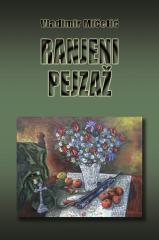
Ranjeni pejzaž

Ranjeni pejzaž

Vladimir Mičetić

A book by Vladimir Mičetić, a doctor and volunteer of the Homeland War from Kutina. The work was awarded the literary prize "We Were the First When It Was Necessary" for 2010, awarded by the Association of Croatian Homeland War Veterans.

Spiritus Movens, 2010.
Croatian. Latin alphabet. Hardcover.
11.52
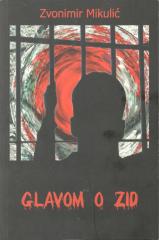
Glavom o zid

Glavom o zid

Zvonimir Mikulić-Đono

Zvonimir Mikulić's novel is dedicated to the young people who distinguished good from evil in the chaos of the Homeland War, often sacrificing their lives. The work seeks to preserve from oblivion their great sacrifice and the small world that was im

HKD Napredak, 2015.
Croatian. Latin alphabet. Paperback.
8.56
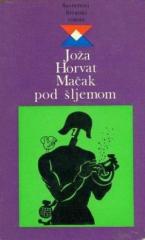
Mačak pod šljemom

Mačak pod šljemom

Joža Horvat

Cult (anti)war novel by Jože Horvat from 1959, a famous Croatian writer for children and adults, playwright, screenwriter, publicist and world sailor.

Grafički zavod Hrvatske (GZH), 1968.
Croatian. Latin alphabet. Hardcover with dust jacket.
7.26
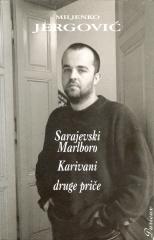
Sarajevski Marlboro / Karivani / Druge priče, 1992–1996

Sarajevski Marlboro / Karivani / Druge priče, 1992–1996

Miljenko Jergović

Along with the reissues of "Sarajevo Marlboro" and "Karivan", the book also contains a new cycle of stories by this author. These stories vividly portray characters, "little" people, witnesses of "big" history, and seemingly insignificant, but for them pi

Durieux, 1999.
Croatian. Latin alphabet. Paperback.
14.72
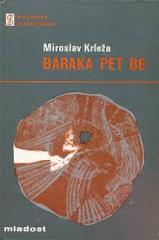
Baraka Pet Be i druge novele

Baraka Pet Be i druge novele

Miroslav Krleža

The collection "Baraka Pet Be i druge novele" brings a selection of Krleža's anti-war novels from the period 1916–1920s, focusing on the senselessness of World War I, the suffering of the Home Guard and the downfall of Austria-Hungary.

Mladost, 1987.
Croatian. Latin alphabet. Hardcover.
5.38
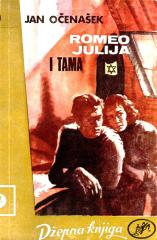
Romeo, Julija i tama

Romeo, Julija i tama

Jan Otčenášek

In occupied Prague in 1942, the student Pavel hides the wounded Jewish woman Hana. In danger and fear, a strong love is born between them. The Gestapo discovers them, Pavel dies tortured under investigation, and Hana survives the Holocaust carrying the me

Svjetlost, 1965.
Serbian. Latin alphabet. Paperback.
3.26