Titostalgija

Titostalgija

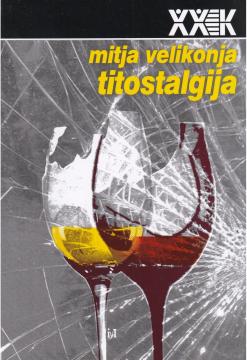
Mitja Velikonja

The author explores why Tito remains a popular symbol of stability, social security and independence, despite critical views of his regime. The book maps the cultural, political and everyday manifestations of "Titostalgia".

Titostalgia – a study of nostalgia for Josip Broz is a socio-cultural study by Slovenian professor Mitja Velikonja, one of the leading researchers of post-socialist nostalgia and Yugonostalgia. The author does not deal with Tito's biography or his historical role, but with the phenomenon of posthumous nostalgia – “Titostalgia” – that emerged after the breakup of Yugoslavia in 1991 and the transitional crises of the 1990s.

The book is structured in five chapters plus an introduction, conclusion and bibliography: the introduction “Josip Broz is good all the way” (inspired by everyday examples such as Tito's picture on sugar in a cafe), mapping nostalgia and research approaches, the culture of Titostalgia (Tito as a living legend), manifestations in popular culture, politics, media and everyday life, and an analysis of the reasons why Tito remains a positively symbolic figure for many (stability, social justice, independence from blocs, prosperity).

Velikonja distinguishes titostalgia from classical nostalgia: it is not just a memory of the past, but a reinterpretation and idealization – younger generations who did not live in Yugoslavia show nostalgia for “better times”. The phenomenon is present in all ex-YU republics, but with different intensity (stronger in Serbia, Bosnia, Montenegro; more subtle in Slovenia and Croatia). The book uses empirical examples: graffiti, souvenirs, music, films, political campaigns, polls and media discourses.

The style is academic, but accessible – critical of simplifications (e.g. that titostalgia is just manipulation or retro-communism), emphasizes its emancipatory potential as a critique of transitional capitalism, poverty and loss of social security. It is one of the key books on Yugonostalgia, influencing further research (e.g. on rock, art, media).

Original title
Titostalgija. Študija nostalgije po Josipu Brozu
Translation
Branka Dimitrijević
Editor
Ivan Čolović
Graphics design
Ivan Mesner
Dimensions
16.5 x 11.5 cm
Pages
182
Publisher
Biblioteka XX vek, Beograd, 2010.
 
Latin alphabet. Paperback.
Language: Serbian.

One copy is available

Condition:Unused
 

Are you interested in another book? You can search the offer using our search engine or browse books by category.

You may also be interested in these titles

Dobri ljudi u vremenu zla

Dobri ljudi u vremenu zla

Svetlana Broz

The book Good people in the time of evil (1999) by Svetlana Broz is a collection of true stories from the war in Bosnia and Herzegovina (1992-1995), which bear witness to the humanity, solidarity and moral courage of individuals in the midst of conflict.

Media centar "Prelom", 2001.
Croatian. Latin alphabet. Paperback.
12.369.27
Knjiga o Srebrenici – spomenar jednog grada

Knjiga o Srebrenici – spomenar jednog grada

Sadik Salimović

Sadik Salimović's Book of Srebrenica (2002) is a memoir of the city: from Ottoman settlement, Islamization and development to the war suffering of 1992–1995 and genocide. It preserves the identity and memory of life before and after the tragedy.

Skupština opštine Srebrenica, 2002.
Croatian. Latin alphabet. Paperback.
11.32
Međunarodni odnosi i vanjska politika socijalističke Jugoslavije

Međunarodni odnosi i vanjska politika socijalističke Jugoslavije

Novak Pribičević, Drago Roksandić, Frane Cetinić, Ranko Petković, Vlado Mileta, Inoslav Bešker, D...

The book analyzes the development and main characteristics of the foreign policy of the SFRY in the context of global and regional political relations, especially during the Cold War.

Naklada CDD, 1979.
Croatian. Latin alphabet. Paperback.
15.82
Doživljaji i putovanja do slobode

Doživljaji i putovanja do slobode

Vladimir Novak

The autobiographical work of Croatian communist activist Vladimir Novak, a survivor of the Ustasha camps, follows his memories of resistance to fascism during World War II.

August Cesarec, 1979.
Croatian. Latin alphabet. Hardcover with dust jacket.
8.26
Zaraćeno poraće: Konfliktni i konkurentski narativi o stradanju i iseljavanju Talijana Istre

Zaraćeno poraće: Konfliktni i konkurentski narativi o stradanju i iseljavanju Talijana Istre

Franko Dota

The book analyzes how conflicting historical narratives about the suffering and mass emigration of Italians from Istria and Rijeka developed in Croatia and Italy after World War II (1943–1956), debunking myths and encouraging an empathetic approach to the

Srednja Europa, 2010.
Croatian. Latin alphabet. Paperback.
11.32
Hrvatska u arhivima izbjegličke vlade 1941-1943.: Izvještaji informatora o prilikama u Hrvatskoj

Hrvatska u arhivima izbjegličke vlade 1941-1943.: Izvještaji informatora o prilikama u Hrvatskoj

Ljubo Boban

Academician Ljubo Boban, in his work Croatia in the Archives of the Government in Exile 1941–1943, brings together a collection of diplomatic reports from various European and international representative offices of the Yugoslav government in exile during

Globus, 1985.
Croatian. Latin alphabet. Hardcover with dust jacket.
9.527.14