Ivan Hrvaćanin
Antique
Rare book

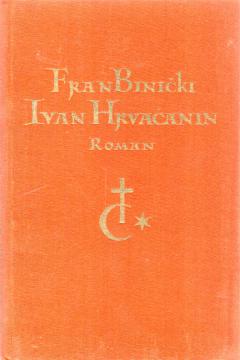
Ivan Hrvaćanin

Fran Binički

A historical novel that follows the heroic struggle of Ban Ivan Karlović (a Croat) against the Turkish conquests in Lika and Krbava at the beginning of the 16th century, with an emphasis on the fall of Kosinje, heroism, betrayal, and defense of the Christ

Fran Binički (1875–1945), a Catholic priest from Lika, philosopher, journalist and writer, is the author of the novel Ivan Hrvaćanin: a novel from Croatian history. The work belongs to the popular historical fiction of the interwar period and focuses on the turbulent 16th century – the time of the most violent Turkish incursions into Croatian lands.

The main character is Ivan Karlović (also known as Ivan Hrvaćanin), a prominent Croatian nobleman and ban, who fights to defend Lika, Krbava and the wider Croatian border. The novel depicts dramatic events: the Turkish conquest of the towns of Kosinj and Novi, the devastation of villages, heroic battles, but also betrayals and internal conflicts. A special place is occupied by the fate of Kosinj and the local Glagolitic printing house, which symbolizes Croatian culture and faith in times of danger.

Binički writes with a strong national and Catholic charge, emphasizing heroism, sacrifice and the defense of Christianity (antemurale Christianitatis). The style is narrative, with elements of the folk epic tradition (bulgarštica), lively dialogues and descriptions of the Lika region. The novel combines historical facts with fiction, creating an exciting read for a wider audience.

The work reflects the interwar interest in Croatian history and national identity at a time when inspiration was sought in famous ancestors. Today it is read as an interesting example of popular historical prose and an important document on the Lika theme in Croatian literature. It is a rare antiquarian edition, but valuable for lovers of historical novels and Lika heritage.

Editor
Josip Andrić
Dimensions
19 x 12.5 cm
Pages
176
Publisher
Hrvatsko književno društvo Sv. Jeronima, Zagreb, 1931.
 
Latin alphabet. Hardcover.
Language: Croatian.

One copy is available

Condition:Unused
Damages or inconvenience notice:
  • Signature of previous owner
 

Are you interested in another book? You can search the offer using our search engine or browse books by category.

You may also be interested in these titles

Odsustvo do buđenja

Odsustvo do buđenja

Leon Uris

Battle Cry (1953) is Leon Uris's debut novel based on his experience in World War II as a member of the 6th Marine Regiment.

Otokar Keršovani, 1970.
Croatian. Latin alphabet. Hardcover with dust jacket.
8.24
Džingis-kan

Džingis-kan

Vasilij Jan

Vasily Yan's novel Genghis Khan depicts the rise of the Mongol leader Temujin, from childhood in the steppes to the creation of the largest empire in the world, highlighting his courage, cruelty, and relentless will to power.

Rad, 1988.
Serbian. Latin alphabet. Hardcover.
9.78
Carica

Carica

Shan Sa

She was born in the fabled Tang Dynasty in the seventh century. She grew up on the banks of the Long River, where she learned to tame horses. She entered the imperial gynaecology, where ten thousand concubines lived.

Vuković & Runjić, 2005.
Croatian. Latin alphabet. Paperback with dust jacket.
4.16
Pričaj im o bitkama, kraljevima i slonovima

Pričaj im o bitkama, kraljevima i slonovima

Mathias Énard

In 1506, Michelangelo Buonarroti was invited by Sultan Bayezid II to design a bridge across the Golden Horn in Constantinople. Furious at Pope Julius II who had humiliated him and refused to pay, Michelangelo left Rome and arrived by ship in Constantinopl

Profil Knjiga, 2012.
Croatian. Latin alphabet. Paperback.
7.44 - 7.46
Posljednji harem

Posljednji harem

Peter Prange

If you love One Thousand and One Nights with a historical twist, this is a sensual harem saga – rich, emotional, irresistible! An epic novel about the end of the Ottoman Empire, harem intrigue, and the birth of modern Turkey.

Naklada Ljevak, 2010.
Croatian. Latin alphabet. Paperback.
11.26
Deobe

Deobe

Dobrica Ćosić

Deobe is a novel about the tragic division of Serbs into Chetniks and Partisans during World War II. Winner of the NIN Award, it is part of a wider epic trilogy, inspired by Ćosić's experiences and historical documents.

Prosveta, 1963.
Croatian. Latin alphabet. Hardcover with dust jacket.
13.74