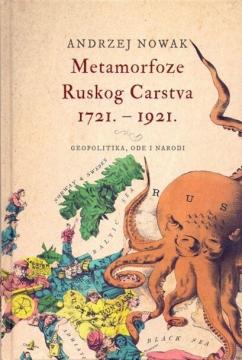
Metamorfoze Ruskog Carstva 1721. - 1921.: Geopolitika, ode i narodi
Povijesna studija o preobrazbama Ruskog Carstva od Petra Velikog do ranog SSSR‑a, usredotočena na imperijalnu geopolitiku, ideološke obrasce i odnose prema narodima unutar carstva.
Metamorfoze Ruskog Carstva: 1721.–1921. Andrzeja Nowaka obuhvaća tristo godina dubokih političkih, društvenih i teritorijalnih promjena koje su oblikovale rusku imperijalnu ideju. Nowak, jedan od najpoznatijih poljskih povjesničara i stručnjak za rusko‑poljske odnose, strukturira knjigu kao široku analizu imperijalnog modela — od njegovih temeljnih načela do praktičnih posljedica na narode koji su ušli u carsku orbitu.
Autor polazi od transformacije Moskovske države u Rusko Carstvo 1721. godine, pod vodstvom Petra Velikog. Razmatra proces modernizacije, militarizacije i centralizacije, kojima je Rusija izgradila status europske sile. U fokus stavlja ideološke mehanizme širenja — pravoslavnu misiju, ideju Trećeg Rima, koncepciju zaštitništva nad slavenskim i pravoslavnim narodima — ali i političke i vojne instrumente imperijalne ekspanzije.
Knjiga detaljno opisuje kako se carstvo širilo prema Baltiku, Crnom moru, Kavkazu, Sibiru i srednjoazijskim stepama, analizirajući istodobno reakcije i otpor naroda uključenih u carsku strukturu. Nowak naglašava dvostruku prirodu ruskog imperijalizma: s jedne strane modernizacijsku ambiciju i administrativnu učinkovitost, a s druge represivnu praksu, asimilacijske politike i strateške manipulacije koje su oblikovale odnose s Poljacima, Ukrajincima, Kavkaskim narodima, Baltima i Srednjoazijcima.
Posebna poglavlja posvećena su 19. stoljeću, epohi u kojoj je ruska imperijalna ideja dosegla vrhunac i istodobno počela pucati pod težinom vlastitih proturječja. Autor rasvjetljava i ključne momente raspada — revoluciju 1905., Prvi svjetski rat i revolucije 1917. — prikazujući kako su ti događaji u konačnici preobrazili carstvo u sovjetsku državu, ali uz nastavak mnogih imperijalnih obrazaca.
Nowakov pristup spaja geopolitičku analizu, povijesnu naraciju i promišljanje o ideologiji, čime knjiga nudi široku i promišljenu interpretaciju ruskog imperijalnog projekta te njegovih trajnih posljedica za narode istočne Europe i Euroazije.
One copy is available