Što je masonerija?
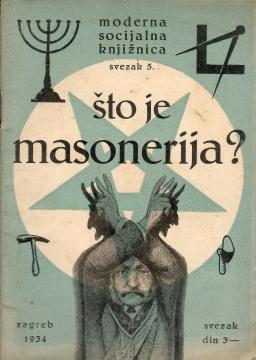
What is Freemasonry? (1934) is a popular pamphlet that presents the origins, organization, and activities of Freemasonry and analyzes its social, political, and cultural influence from the perspective of Catholic social doctrine.
What is Freemasonry? is a booklet that belongs to a series of popular brochures that addressed current social, political and ideological issues from the perspective of Catholic social doctrine. At the time of its publication, the topic of Freemasonry was the subject of numerous public debates, so the purpose of the publication was to bring the emergence, organization and activities of Freemasonry closer to the wider public.
The publication provides an overview of the historical development of Freemasonry from its beginnings in Europe, explains the structure of Masonic lodges, symbolism, rituals and principles on which the activities of Masonic organizations are based. Special attention is paid to the influence of Freemasonry on political, social and cultural processes in Europe and the former Yugoslavia. The author seeks to present Freemasonry as a movement that operates outside the framework of traditional religious institutions and considers its relationship to religion, state and society.
Like other publications from the MOSK library, the booklet has a distinct educational and polemical character. It is written in a simple and accessible style in order to be understandable to a wide range of readers. The text reflects the Catholic perspective of the 1930s, which is why it views Freemasonry critically and warns of ideological differences between Masonic principles and church doctrine.
Today, this brochure is interesting primarily as a historical document that testifies to the social and ideological debates of the interwar period in Croatia. In addition to providing insight into the understanding of Freemasonry at the time, it shows how Catholic intellectual and cultural organizations sought to inform the public about issues they considered important for the social and moral life of the community.
One copy is available