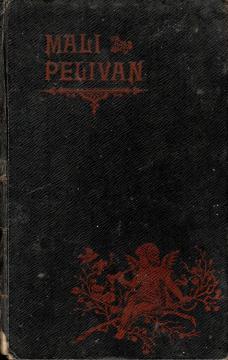
Mali pelivan i druge priče i pjesme za mladež
Rare book
Antique

Mali pelivan i druge priče i pjesme za mladež

Josip Cvrtila

Mali pelivan i druge priče i pjesme za mladež (The Little Pelivan and Other Stories and Poems for Youth) (1926) is a collection of short stories and poems in which Josip Cvrtila promotes the values ​​of kindness, honesty, faith and perseverance through ch

Mali pelivan i dobre šteta i poješta za uljež by Croatian writer Josip Cvrtila belongs to the period of Cvrtila's most intensive work for children and young people, when his famous works Midsummer Night's Night (1922) and Tri dječaka (1925) were written.

The collection brings together shorter stories and poems intended for young readers. The focus is on children's characters and their everyday adventures, but also fantastic elements, unusual events and motifs from folk tales and the fairy-tale world. The title mali pelivan symbolizes willpower, courage and readiness to overcome obstacles, which is one of the fundamental messages of the book. Through simple, accessible and vivid stories, the author seeks to entertain young readers, but at the same time encourage them to think about moral values ​​and personal responsibility.

Cvrtila's work is characterized by imagination, lyricism and closeness to a child's view of the world. His stories often connect real situations with fantastic motifs, and the storytelling is imbued with Christian and educational values that were characteristic of Croatian children's literature of the interwar period. Critics have emphasized his ability to portray children's naivety, sensitivity, and imagination, and rank him among the most significant Croatian writers for young people of the first half of the 20th century.

Today, Mali pelivan i druge priče i pjesme za mladež is considered a valuable example of Croatian children's literature between the two world wars. The work testifies to the pedagogical and literary efforts of its time and occupies an important place in the oeuvre of the author, who dedicated a large part of his life to raising children and creating literature for young readers.

Dimensions
19 x 12 cm
Pages
61
Publisher
Pedagoško-književni zbor, Zagreb, 1926.
 
Latin alphabet. Hardcover.
Language: Croatian.

One copy is available

Condition:Used, good condition (visible signs of use)
Damages or inconvenience notice:
  • Damaged back
 

Are you interested in another book? You can search the offer using our search engine or browse books by category.

You may also be interested in these titles

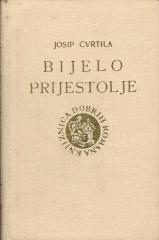
Bijelo prijestolje

Bijelo prijestolje

Josip Cvrtila

A novel set in contemporary life in which the author follows the fates of members of the rural intelligentsia, their ideals, moral dilemmas, and everyday struggles in Croatian society between the two wars.

Hrvatsko književno društvo Sv. Jeronima, 1933.
Croatian. Latin alphabet. Hardcover.
6.24
Sam protiv njih

Sam protiv njih

Roman Leljak

A non-fiction work by a Slovenian investigator of the UDB archives. The author, a former KOS employee, left the army after learning about the crimes of the Yugoslav army during the war and the post-war period, and dedicated himself to exposing the secret

Vlastita naklada, 1990.
Croatian. Latin alphabet. Paperback.
16.42
Obiteljsko pravo

Obiteljsko pravo

Mira Alinčić, Ana Bakarić, Nenad Hlača, Dubravka Hrabar

​The book represents a fundamental work for understanding family law in the Croatian legal system, providing a thorough analysis and practical guidelines for understanding and applying family law norms.​

Birotehnika, 1994.
Croatian. Latin alphabet. Paperback.
11.26
Kupi mi vilovita konja

Kupi mi vilovita konja

Zdenka Jušić-Seunik
Mladost, 1972.
Croatian. Latin alphabet. Hardcover.
3.26
Duga boli

Duga boli

Fulton J. Sheen

Typed note from the preface: "Reproduced in cyclostyle by the theologians of the Higher Theological School in Đakovo for the use of theologians and priests only."

Visoka bogoslovna škola, 1959.
Croatian. Latin alphabet. Paperback.
14.32
Deobe 1-3

Deobe 1-3

Dobrica Ćosić

This work, awarded the NIN Prize for that year, is considered one of the most significant in Serbian literature after World War II.

Prosveta, 1961.
Serbian. Cyrillic alphabet. Hardcover with dust jacket.
The book consists of 3 volumes
11.42