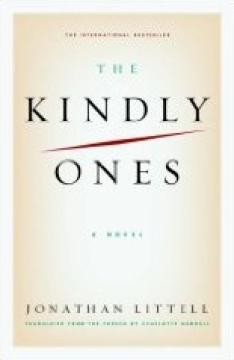
The Kindly Ones

The Kindly Ones

Jonathan Littell

A monumental novel about World War II and the Holocaust told from the perspective of an SS officer, exploring evil, guilt, and the moral limits of human nature.

The Kindly Ones by Jonathan Littell is one of the most significant and controversial historical novels of the 21st century. The narrator and main character is the fictional SS officer Maximilien Aue, who describes in the form of a memoir his participation in key events of World War II – from the mass shootings on the Eastern Front and the Battle of Stalingrad to the work of the Nazi bureaucracy and the final collapse of the Third Reich.

Through Aue's perspective, Littell does not seek to justify crimes, but explores the mechanisms of totalitarianism, obedience and moral decay of the individual within a system that turns evil into administrative routine. The novel combines historical documentation with psychological analysis, philosophical reflections and numerous literary references, especially to the ancient tragedy, after which it was given its title.

The work is known for its exceptional scope, detailed depiction of the Nazi apparatus and uncompromising confrontation with the themes of violence, guilt and responsibility. It won the Prix Goncourt and the Grand Prix du roman de l'Académie française in 2006 and is considered one of the most important novels about the Holocaust and totalitarianism, provoking strong debates about the limits of literary depiction of historical evil and human responsibility.

Original title
Les Bienveillantes
Translation
Charlotte Mandell
Graphics design
Eric Buttler
Dimensions
23 x 15 cm
Pages
983
Publisher
HarperCollins Publishers, New York, 2009.
 
Latin alphabet. Paperback.
Language: English.

One copy is available

Condition:Used, excellent condition
 

Are you interested in another book? You can search the offer using our search engine or browse books by category.

You may also be interested in these titles

Bartolomejska noć: knjiga 1-2

Bartolomejska noć: knjiga 1-2

Alexandre Dumas

This book focuses on one of the bloodiest events in French history – St. Bartholomew's Day in 1572, when thousands of French Protestants were massacred in Paris and across the country.

Epoha, 1966.
Croatian. Latin alphabet. Hardcover with dust jacket.
The book consists of two volumes
9.36
Evgenija Grande / Muzej starina

Evgenija Grande / Muzej starina

Honore de Balzac

In his novels Eugenie Grandet (1833) and The Museum of Antiquities (1837), Balzac explores universal themes of greed, human passions, sacrifice, and moral dilemmas, placing them in different social contexts of 19th-century French society.

Svjetlost, 1963.
Croatian. Latin alphabet. Hardcover.
3.48
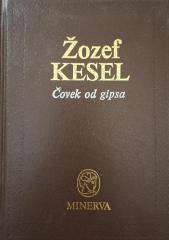
Čovek od gipsa

Čovek od gipsa

Joseph Kessel

The novel, whose original title is L'Homme de plâtre, explores complex human destinies through the story of a protagonist whose life symbolically reflects fragility and vulnerability, like plaster.

Minerva, 1987.
Serbian. Latin alphabet. Hardcover.
4.64
Četrdeset pet vitezova, sv. 1-2

Četrdeset pet vitezova, sv. 1-2

Alexandre Dumas

Alexandre Dumas – The Forty-Five Knights, published in 1966, is part of a grand trilogy about the political and religious turmoil in France during the late 16th century.

Epoha, 1966.
Croatian. Latin alphabet. Hardcover with dust jacket.
The book consists of two volumes
9.48
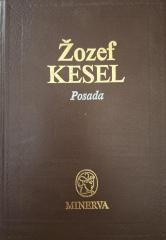
Posada

Posada

Joseph Kessel

The novel is considered one of Kessel's most significant works, inspired by his experiences as a pilot during World War I.

Minerva, 1987.
Serbian. Latin alphabet. Hardcover.
4.38
Talijanske kronike

Talijanske kronike

Marie-Henry Beyle Stendhal

Flipping through old Italian chronicles, Stendhal finds motifs for a series of his novels in which he depicts the passions of the Middle Ages and the unrestrained madness of the Renaissance.

Matica hrvatska, 1948.
Croatian. Latin alphabet. Hardcover with dust jacket.
9.36