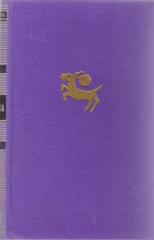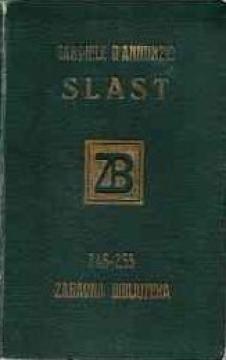
Slast: roman iz života rimske aristokracije
Antique
Rare book

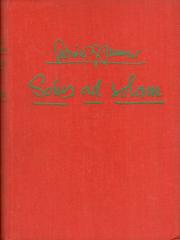
Slast: roman iz života rimske aristokracije

Gabriele D'annunzio

Sweetness is the first novel by Gabriele d'Annunzio, written in 1889 in Francavilla al Mare, and published the following year by Fratelli Treves.

The novel's main character and central theme is the decadent aesthete. The novel is a central text of the Italian decadent literary movement, Decadentism. D'Annunzio was inspired by Huysmans's pioneering work À Rebours, which also strongly influenced Oscar Wilde's novel The Picture of Dorian Gray. The aesthete Andrea is a nobleman who loves only art and is devoted to the worship of his wife Elena. Elena's chimerical nature, however, destroys the protagonist's balance and reveals her as a kind of femme fatale. The style of the novel is also of paramount importance: d'Annunzio adopts a unique writing style full of courtly neologisms, often alternating with assonance and consonance. The work's insistence on a unique, pure language may explain its quasi-manneristic and baroque tones.

Original title
Il Piacere
Translation
Jakov Sedmak
Editor
R. M. Ivanović
Dimensions
18 x 12 cm
Pages
352
Publisher
Naklada kraljevske zemaljske tiskare, Zagreb, 1921.
 
Latin alphabet. Hardcover.
Language: Croatian.

One copy is available

Condition:Used, good condition (visible signs of use)
Specificity of this instance:
Bound
Damages or inconvenience notice:
  • Traces of patina
 

Are you interested in another book? You can search the offer using our search engine or browse books by category.

You may also be interested in these titles

Godan

Godan

Munshi Prem Chand
Kosmos, 1960.
Serbian. Latin alphabet. Paperback.
4.22 - 4.26
Deobe 1-3

Deobe 1-3

Dobrica Ćosić

This work, awarded the NIN Prize for that year, is considered one of the most significant in Serbian literature after World War II.

Prosveta, 1961.
Serbian. Cyrillic alphabet. Hardcover with dust jacket.
The book consists of 3 volumes
11.42
Pripovetke iz levog i desnog džepa

Pripovetke iz levog i desnog džepa

Karel Čapek

These stories deal with different topics, although most deal with different criminal acts, from fraud and fortune-telling to marriage fraud and murder.

Jugoslavijapublik, 1980.
Croatian. Latin alphabet. Hardcover.
5.22
Zagrepčanka

Zagrepčanka

Branislav Glumac

Branislav Glumac published a novel without periods or commas in 1974, as the relentless stream of thought of a young rebel. Published in socialist Yugoslavia, the work caused a scandal with its openness and became a classic about generational rebellion.

IROS, 1986.
Croatian. Latin alphabet. Hardcover.
8.22 - 8.24
Deobe

Deobe

Dobrica Ćosić

Deobe is a novel about the tragic division of Serbs into Chetniks and Partisans during World War II. Winner of the NIN Award, it is part of a wider epic trilogy, inspired by Ćosić's experiences and historical documents.

Prosveta, 1963.
Croatian. Latin alphabet. Hardcover with dust jacket.
13.74
Ulazeći u Varcar

Ulazeći u Varcar

Ivan Lovrenović

The hybrid book – a novel, poem and essay in one – is a dedication to his native Varcar, a small village in central Bosnia, where the author's roots intertwine with the history, myth and chaos of the 20th century.

Fraktura, 2016.
Croatian. Latin alphabet. Hardcover with dust jacket.
14.42