Cockpit

Cockpit

Jerzy Kosinski

The novel Cockpit (1975) is a work by Polish-American writer Jerzy Kosinski. The story follows Tarden, a former agent of the mysterious security agency "Service", who has erased his identity from all files and become a fugitive.

Without a fixed identity, Tarden moves around the world, looking for adventure and intrigue, using numerous masks and roles - from vigilante to savior, from judge to con artist. Entering the lives of others, he forces them to face his judgment, exposing their weaknesses and illusions of security.

The plot is fragmented, consisting of a series of episodes that depict Tarden's manipulations, often characterized by psychological and physical control. The novel explores themes of survival in a hostile world, where Tarden derives his strength from absolute control, often subverting even death.

Kosinski uses a dark, provocative style, imbued with elements of perversion, violence and social criticism, which reflects his distinctive literary stamp. The book received mixed reviews – while British readers praised it, American critics, such as Kirkus Reviews, found it lacking in depth beyond Kosinski's narrative skills. Cockpit is a powerful meditation on identity, power and human nature in a postmodern world.

Translation
Vlado Opačić
Editor
Bože Čović, Zdravko Židovec, Dragan Milković
Graphics design
Nenad Dogan
Dimensions
18.5 x 11 cm
Pages
259
Publisher
August Cesarec, Zagreb, 1985.
 
Latin alphabet. Paperback.
Language: Croatian.

Two copies are available

Copy number 1

Condition:Used, very good condition
Damages or inconvenience notice:
  • Traces of patina

Copy number 2

Condition:Used, very good condition
Damages or inconvenience notice:
  • Traces of patina
 

Are you interested in another book? You can search the offer using our search engine or browse books by category.

You may also be interested in these titles

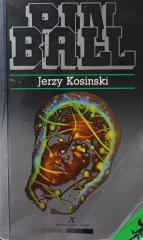
Pinball

Pinball

Jerzy Kosinski

"Pinball" (1982), a novel by Jerzy Kosinski written for George Harrison, is a rock 'n' roll mystery that explores existential crises in a postmodern world. The novel offers an insight into the artistic soul and the struggle with identity in a chaotic worl

August Cesarec, 1989.
Croatian. Latin alphabet. Paperback.
2.96 - 2.99
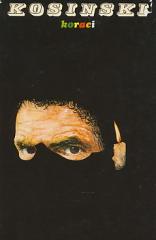
Koraci

Koraci

Jerzy Kosinski

"Steps" is a collection of short stories connected by the character of an unnamed narrator.

Centar za informacije i publicitet (CIP), 1981.
Croatian. Latin alphabet. Hardcover with dust jacket.
2.98
Svjetlost se ugasila

Svjetlost se ugasila

Rudyard Kipling

The first novel by English Nobel Prize winner Rudyard Kipling (1865–1936), first published in Lippincott's Monthly Magazine (happy ending variant), and then in a book version with a tragic ending.

Zora, 1957.
Croatian. Latin alphabet. Hardcover with dust jacket.
5.42
Moskva – Petuški

Moskva – Petuški

Venjedikt Jerofejev

Venedikt Yerofeyev's postmodern prose poem is today considered a classic of new Russian literature. It is compared to Gogol and Kharms for its poetics of absurdity, satire, and metaphysical depth.

LOM, 217.
Serbian. Cyrillic alphabet. Paperback.
11.24
Budenbrokovi

Budenbrokovi

Thomas Mann

The Buddenbrooks is not just a family chronicle – it is a profound, melancholic fresco of how time and change inexorably creep into the core of a respectable bourgeois family, bringing with them a downfall that is both tragic and inevitable.

Svjetlost, 1961.
Serbian. Latin alphabet. Hardcover.
The book consists of two volumes
11.54
Pažnja

Pažnja

Alberto Moravia

Francesco Merighi returns to Rome after 9 years abroad. In order to write an "authentic" novel, he keeps a diary of his life with his wife and their daughter Babe. He obsessively analyzes lies in relationships, the temptation of

Otokar Keršovani, 1966.
Croatian. Latin alphabet. Hardcover.
3.96