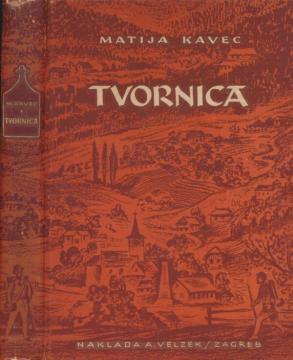
Tvornica : roman
Matuš Kavec's social novel "The Factory" depicts difficult working conditions, industrial progress, and social conflicts. The author analyzes the struggle of the working class and the impact of industrialization on human destiny.
The novel "The Factory" by the Slovak writer Matuš Kavec (published in Croatian translation in 1945) is a poignant and multi-layered social-realist work that focuses on the motif of industry and its impact on the individual and society. The plot takes place in the setting of a modern factory, which in the novel does not function only as a physical place of work, but also as a powerful symbol of the new era, the capitalist order and the ruthless machinery that shapes and transforms the lives of ordinary people. Through the fates of workers, engineers and owners, Kavec presents in detail class differences, difficult working conditions and the psychological pressure brought about by industrialization. The factory becomes a web of human destinies in which personal dramas, the struggle for mere survival, alienation from nature and interpersonal relationships, but also the awakening of workers' consciousness and the pursuit of justice are intertwined. His style is characterized by pronounced social sensitivity, vivid descriptions of the industrial environment and convincing characterization of characters from the margins of society. "The Factory" is a powerful literary study of human dignity, industrial progress, and the price an individual pays in conflict with the ruthless system of modern production.
One copy is available