"A Reader of Foreign Literature 2 - From Romanticism to Our Days" primarily presents a selection of writers, but in addition to this basic purpose, it also provides a brief insight into the development of literary creation from its earliest beginnings to
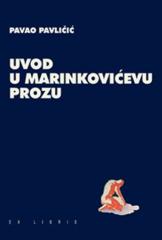
On the occasion of the 100th anniversary of Ranko Marinković's birth, Pavao Pavličić, who has been studying the author's work for years, has prepared a book of studies and essays dedicated to this classic of Croatian literature.
Ex Libris, 2014.
Croatian. Latin alphabet. Paperback.
12.36 €
Language & linguistics • Methodology • Education • Pedagogy • Literary Theory
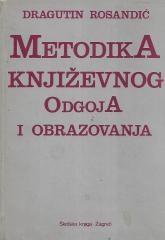
A fundamental work of Croatian methodological science that explores the theory, goals, and methods of teaching literature, connecting the pedagogical, psychological, and aesthetic aspects of literary education.
Školska knjiga, 1988.
Croatian. Latin alphabet. Hardcover.
16.42 €
Bosnian literature • Croatian literature • Literary criticism • Serbian literature • Literary Theory
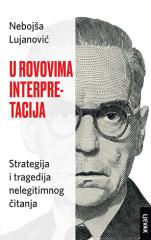
The book by Split writer and political scientist Nebojša Lujanović (born 1981 in Novi Travnik) is an intriguing polemic against the ideological abuses of Ivo Andrić, especially the nationalistic readings of his work from the Bosnian, Serbian and Croatian
V.B.Z, 2020.
Croatian. Latin alphabet. Hardcover.
13.4410.75 €
Croatian literature • History of literature • Literary Theory
Maja Bošković-Stulli, Divna Zečević, Eduard Hercigonja, Marin Franičević, Franjo Švelec, Rafo Bog...
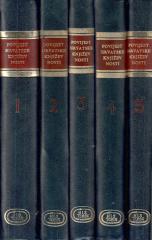
A classic work of Croatian literary historiography. The edition covers the periods from oral tradition to modernism, emphasizing the interference of oral and written literature, sociological context, aesthetic norms, and European connections.
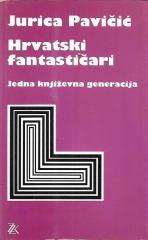
This is one of the first synthetic analyses of the so-called Croatian fantasy generation (or "Borgesians", "young prose" with elements of fantasy) that appeared in the late 1960s and during the 1970s.
Zavod za znanost o književnosti Filozofskoga fakulteta, 2000.
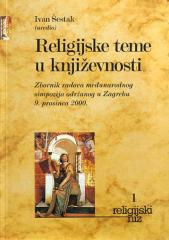
Unfortunately, over time, art (especially literature), at least in European history, became a separate sphere of cultural life, separated both from religion and from the world of ethical (humane) values.
Filozofsko-teološki institut Družbe Isusove, 2001.