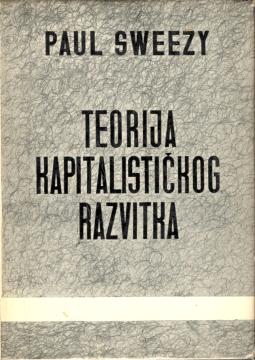
Teorija kapitalističkog razvitka: Načela marksističke političke ekonomije
A classic work of Marxian political economy examining the dynamics of capitalist development, the theory of value, capital accumulation, economic crises, monopolisation and imperialism.
The Theory of Capitalist Development: Principles of Marxian Political Economy is the best-known work of American economist Paul M. Sweezy and one of the most influential systematic presentations of Marxian economic theory in the twentieth century. First published in 1942, the book offers a comprehensive exposition and critical reassessment of Marx's analysis of capitalism.
Sweezy examines the labour theory of value, the creation of surplus value, the relationship between wages and profits, capital accumulation and the contradictions of capitalist production. Particular attention is devoted to the tendency of the rate of profit to fall, the transformation of values into prices of production and theories of economic crises.
Examining the concentration and centralisation of capital, the author explores the transition from competitive to monopoly capitalism, the economic role of the state and the relationship between capitalist expansion and imperialism.
Sweezy connects Marx's theoretical principles with debates among later Marxian economists, including Rudolf Hilferding, Rosa Luxemburg and Vladimir Lenin.
A foundational work of modern Marxian political economy, the book remains an important contribution to the history of economic thought, the critique of capitalism and debates concerning its structural contradictions.
One copy is available