Zen i japanska kultura
Rare book

Zen i japanska kultura

Daisetz Teitaro Suzuki

This classic work is one of the most influential Western introductions to Zen Buddhism. Suzuki, the world's most famous interpreter of Zen, shows how Zen has shaped almost every aspect of Japanese culture from the 12th century onwards.

Today, the classic work of the Japanese scholar of Zen Buddhism represents an indispensable reference that, since its first edition (in 1938 in Japan, and under this title in 1959 in the USA), "ignited a spark of interest in Buddhism and Japanese traditional arts on a popular and scientific level." The author focused on providing the Western reader with better quality translations of Buddhist texts with an overview of the basic concepts of spiritual discipline, and notes on Japanese artistic culture.

The book is divided into thematic chapters:

  • Zen and the Samurai Spirit - explains why the samurai embraced Zen: directness, calmness in the face of death, "no-mind" (mushin) in battle and bushidō as Zen in practice.
  • Zen and the tea ceremony - the chanoyu ritual is not just a drink, but a spiritual exercise of compressing the four principles: wa (harmony), kei (respect), sei (purity), jaku (calmness).
  • Zen and the sword – a story about the "sword that gives life" versus the "sword that kills"; legendary masters like Takuan Sōhō and Yagyū Munenori.
  • Zen and haiku – how Bashō, Buson and Issa achieve enlightenment in 17 syllables; haiku as a moment of satori.
  • Zen and gardens – dry landscapes (karesansui) of Ryoan-ji and Daisen-in as three-dimensional koans.
  • Zen and calligraphy and painting – Sesshū, Hakuin and "one brushstroke" that lasts forever.

Suzuki emphasizes that Zen is not a philosophy but an experience: "Zen is like a finger pointing to the moon - you should not look at the finger, but at the moon." For him, Japanese culture is not "applied Zen", but Zen that has become unconscious of itself - the highest level.

The book is full of anecdotes (eg the master hitting the student with a stick to wake him up), paradoxes and koan quotes. Although it was written more than half a century ago, it remains unsurpassed in its depth and simplicity of expression, and is still today the most valued bridge between Eastern spirituality and the Western reader.

Original title
Zen and Japanese Culture
Translation
Nada Horvat
Editor
Dubravko Marijanović
Dimensions
24 x 16 cm
Pages
438
Publisher
Sipar, Zagreb, 2016.
 
Latin alphabet. Hardcover.
Language: Croatian.
ISBN
978-9-53803-908-9

No copies available

The last copy was sold recently.

 

Are you interested in another book? You can search the offer using our search engine or browse books by category.

You may also be interested in these titles

Što je Opus Dei? Priče o Bogu, krvi, novcu i vjeri

Što je Opus Dei? Priče o Bogu, krvi, novcu i vjeri

Noam Friedlander

The Catholic movement Opus Dei, founded in 1928 in Spain as a small devout group, is today one of the most influential and richest church organizations in the world – with millions of members, a headquarters in New York worth billions, and branches across

Naklada Ljevak, 2005.
Croatian. Latin alphabet. Hardcover.
13.26 €
Kleine Kirchen-geschichte

Kleine Kirchen-geschichte

August Franzen
Herder, 1986.
German. Latin alphabet. Paperback.
2.50 €
Mali liturgijski leksikon

Mali liturgijski leksikon

Rupert Berger

Das Buch richtet sich an alle, die an liturgischen Riten teilnehmen, darunter Glöckner, Pfarrer, Sänger, Studenten und andere Gottesdiensthelfer.

Kršćanska sadašnjost, 1993.
Croatian. Latin alphabet. Paperback.
4.26 €
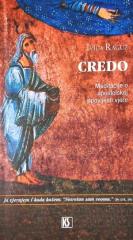
Credo

Credo

Ivica Raguž

Meditationen über das Apostolische Glaubensbekenntnis: „Ich glaube auch, wenn ich sage: ‚Ich bin sehr bedrängt‘“ (Ps 116,10)

Kršćanska sadašnjost, 2001.
Croatian. Latin alphabet. Paperback.
3.98 €
Biblija i njezina povijest: Kraljevi i proroci. Svezak 4

Biblija i njezina povijest: Kraljevi i proroci. Svezak 4

Enrico Galbiati, Elio Guerriero, Antonio Sicari

Eine umfassende Präsentation, die eine historische, literarische und religiöse Einführung in die Bibel und ihre Welt ermöglicht.

Kršćanska sadašnjost, 1983.
Croatian. Latin alphabet. Hardcover.
3.50 €
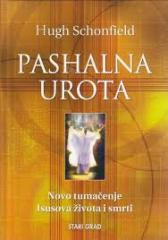
Pashalna urota: Novo tumačenje Isusova života i smrti

Pashalna urota: Novo tumačenje Isusova života i smrti

Hugh J. Schonfield

Autor tvrdi da je Isus, svestan mesijanskih proročanstava, pažljivo isplanirao svoj život, hapšenje, raspeće i lažnu smrt kako bi ispunio proročanstva. Plan je propao zbog koplja rimskog vojnika – Isus je umro, a vaskrsenje je kasnije mitologizovano.

Stari grad, 2003.
Croatian. Latin alphabet. Hardcover.
9.647.25 - 9.687.74 €