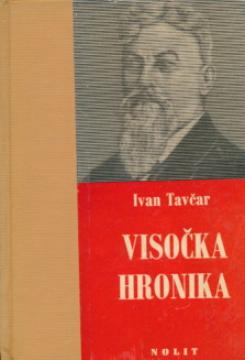
Visočka hronika
Translation
Uroš Džonić
Dimensions
17 x 12 cm
Pages
220
Publisher
Nolit, Beograd, 1966.
Latin alphabet. Hardcover.
Language: Serbian.
No copies available
The last copy was sold recently.
No copies available
The last copy was sold recently.
Are you interested in another book? You can search the offer using our search engine or browse books by category.

The sequel to the ultimate hit Sex Scandal: Confessions of a Zagreb Model, Sex Scandal 2: Politicians in Bed, exposes the moral underbelly of Croatian politicians who publicly act as selfless fighters for the common good, while privately indulging in lust
The Bookseller's Promise is the third book in the Cliff Janeway series by the award-winning John Dunning, an unusually talented and unique American writer.
This work, awarded the NIN Prize for that year, is considered one of the most significant in Serbian literature after World War II.

With the rhythm of rock'n'roll, Jackie Collins takes the reader behind the scenes of the world of fame and fortune, where three music stars — Kruger, Rafaella and Bobby — experience turbulent passions, betrayals and the struggle for success, while ambitio
In Boll's novels, one of the central themes is the attempt to preserve basic moral values in a time of terror, as well as in a period of material prosperity and corruption.
In this work, the character of police inspector Keller appears for the first time, who fights crime with unusual methods.