
Vrući vetar
Graphics design
Miloš Majstorović
Dimensions
21 x 13 cm
Pages
251
Publisher
Rad, Beograd, 1980.
Distribution: 6,000 copies
Latin alphabet. Paperback.
Language: Serbian.
No copies available
The last copy was sold recently.
No copies available
The last copy was sold recently.
Are you interested in another book? You can search the offer using our search engine or browse books by category.

Following his own enjoyment of local cuisine, the author brings together a series of recipes for everyday and common Dalmatian dishes in the book.

Enemies: A Love Story, perhaps Singer's best-known novel, takes place in New York in the 1950s.

The sequel to the ultimate hit Sex Scandal: Confessions of a Zagreb Model, Sex Scandal 2: Politicians in Bed, exposes the moral underbelly of Croatian politicians who publicly act as selfless fighters for the common good, while privately indulging in lust


In Boll's novels, one of the central themes is the attempt to preserve basic moral values in a time of terror, as well as in a period of material prosperity and corruption.
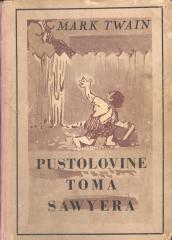

The Adventures of Tom Sawyer is the first truly realistic children's novel, not only in American but also in world children's literature. Twain's most famous work and a favorite children's book in which the writer described his boyhood experiences.