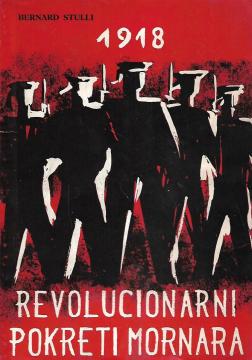
Revolucionarni pokreti mornara 1918
No copies available
The last copy was sold recently.
No copies available
The last copy was sold recently.
Are you interested in another book? You can search the offer using our search engine or browse books by category.
The book is deeply rooted in the local history and culture of Osijek, with an emphasis on cemetery motifs that serve as a metaphor for memory, death, and disappearance.
The first comprehensive account of the suffering of Istrian civilians (mostly women, children and the elderly) in Austro-Hungarian refugee camps during World War I, based on the personal memories of the author from Ližnjan.
"Report for the school year 1946/47" of the First Boys' Gymnasium in Osijek is an annual school report from the first post-war period. It contains data on classes, students, teaching staff and the work of the school during the reconstruction period.
A historical and cultural-topographical work by Radoslav Lopašić, depicting the past, settlements, fortifications, population and cultural heritage of the areas along the Kupa and Korana rivers. It is supplemented with contributions by Emilij Laszowski.
The capital bibliography of printing and publishing activities in Osijek from 1742 to 1978 lists thousands of books, newspapers, magazines and small print, regardless of language. A classic of Croatian bibliographic creativity of the 20th century.
The book "Osijek Cemeteries" (2002) by Bogdan Mesinger presents an overview of the history, development and cultural significance of the cemeteries in Osijek.