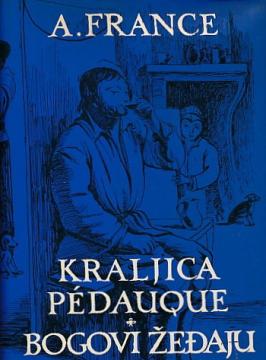
Kraljica Pedauque, Bogovi žeđaju

Kraljica Pedauque, Bogovi žeđaju

Anatole France
Original title
La rotisserie de la reine Pedauque
Translation
Branka i Ivo Hergešić
Graphics design
Boris Dogan
Dimensions
20.5 x 15.3 cm
Pages
422
Publisher
Naprijed, Zagreb, 1965.
 
Latin alphabet. Hardcover with dust jacket.
Language: Croatian.

One copy is available

Condition:Used, good condition (visible signs of use)
Damages or inconvenience notice:
  • Traces of patina
  • Damaged book cover
 

Are you interested in another book? You can search the offer using our search engine or browse books by category.

You may also be interested in these titles

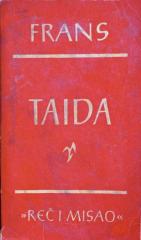
Taida: roman iz aleksandrijskih vremena

Taida: roman iz aleksandrijskih vremena

Anatole France

The novel Taida, published in 1890, is one of the most famous works by French Nobel Prize winner Anatole France. The work is inspired by the legend of Saint Taida of Egypt, a 4th-century courtesan who converted to Christianity.

Rad, 1961.
Serbian. Latin alphabet. Paperback.
1.99
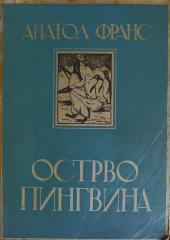
Ostrvo pingvina

Ostrvo pingvina

Anatole France
Kultura, 1946.
Serbian. Cyrillic alphabet. Paperback.
3.99
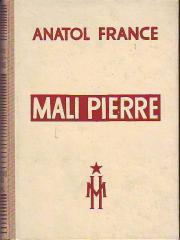
Mali Pjer

Mali Pjer

Anatole France
Novo pokolenje, 1950.
Serbian. Cyrillic alphabet. Paperback with dust jacket.
2.99
Deobe

Deobe

Dobrica Ćosić

Deobe is a novel about the tragic division of Serbs into Chetniks and Partisans during World War II. Winner of the NIN Award, it is part of a wider epic trilogy, inspired by Ćosić's experiences and historical documents.

Prosveta, 1963.
Croatian. Latin alphabet. Hardcover with dust jacket.
13.74
Usta puna zemlje

Usta puna zemlje

Branimir Šćepanović

The novel "Usta puna zemlje" (1970), the masterpiece of the Serbian writer Branimir Šćepanović, is a psychologically in-depth explorer of the limits of the human soul, solitude and existential freedom, reminiscent of Kafka and Camus.

BIGZ, 1987.
Serbian. Latin alphabet. Paperback.
3.96 - 3.98
Deobe 1-3

Deobe 1-3

Dobrica Ćosić

This work, awarded the NIN Prize for that year, is considered one of the most significant in Serbian literature after World War II.

Prosveta, 1961.
Serbian. Cyrillic alphabet. Hardcover with dust jacket.
The book consists of 3 volumes
11.42