Nova akropola filozofija – humanizam – kultura #53
One copy is available

One copy is available
Are you interested in another book? You can search the offer using our search engine or browse books by category.
John Rawls, the founder of modern liberalism, offers a roadmap for a stable society: "Political Liberalism," a sequel to the classic "A Theory of Justice," is not just a philosophical treatise, but a practical model for pluralistic societies like ours.
For Engels, the Peasants' War was the first major class conflict in German history and a forerunner of later revolutionary struggles. He sees in it important lessons about the role of class, leadership and ideology in revolutionary movements.
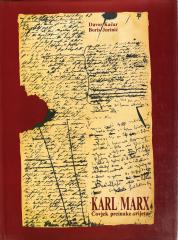
Karl Marx - The Man Who Changed the World (1983) by Davor Kačar and Boris Jurinić is a study of the life and work of Karl Marx. It explores his philosophy, economic theory, and influence on world history through Marxism, with illustrations and documents.
Katarina Peović's collection of texts revives Marxism in the era of capitalist crisis. The book analyzes key works by Marx and Engels, connecting them with contemporary thinkers such as Alain Badiou and Michael Lebowitz.
In the book, Todorov examines the relationship between the production of discourse (rhetoric) and its interpretation (hermeneutics), focusing on verbal symbolism – the phenomenon of indirect meaning that builds on direct, literal meaning.
In this provocative essay, Sloterdijk intervenes in the heated debate of the 1980s about modernism and postmodernism. A short, sharp text – essential for understanding Sloterdijk's early approach to aesthetics, media and the crisis of modernity.