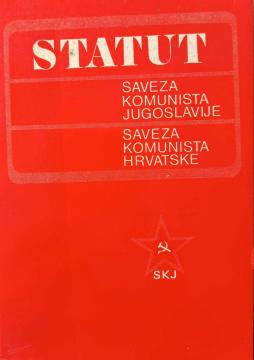
Statut Saveza komunista Jugoslavije, Saveza komunista Hrvatske
No copies available
The last copy was sold recently.
No copies available
The last copy was sold recently.
Are you interested in another book? You can search the offer using our search engine or browse books by category.
The book analyzes how conflicting historical narratives about the suffering and mass emigration of Italians from Istria and Rijeka developed in Croatia and Italy after World War II (1943–1956), debunking myths and encouraging an empathetic approach to the
The book represents a fundamental sociological and political science work that deals with the relationship between social structures and political systems, with special emphasis on Marxist theory, self-management, and the socialist society of the former
The author explores why Tito remains a popular symbol of stability, social security and independence, despite critical views of his regime. The book maps the cultural, political and everyday manifestations of "Titostalgia".
The autobiographical work of Croatian communist activist Vladimir Novak, a survivor of the Ustasha camps, follows his memories of resistance to fascism during World War II.
And what kind of husband was Tito? Man? The first Croatian biography of Comrade Jovanka answers that question, which was really of great interest to about 20 million Yugoslavs.
The book depicts the development of a Bosnian bey family that, throughout the 19th and 20th centuries, transformed from a landowning family into a modern bourgeois family, reflecting broader social changes in Bosnia and Herzegovina.