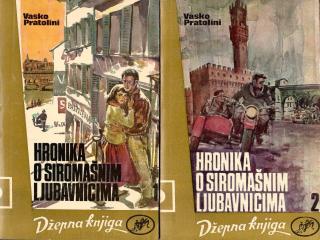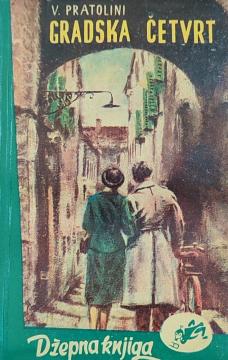
Gradska četvrt
In Florenz, 1932–1939, erleben junge Männer im Armenviertel Santa Croce erste Liebe, Kämpfe, Freundschaften und das Erwachsenwerden. Der Faschismus breitet sich aus, doch im Straßenleben erfahren sie Momente der Freude und Sehnsucht und entwickeln so ein
„Das Stadtviertel“ (geschrieben 1943–1944, veröffentlicht 1945) von Vasco Pratolini ist ein neorealistischer Roman, der das Leben junger Menschen im Florentiner Viertel Santa Croce (nahe der Piazza Santa Croce) in den Jahren 1932–1939, also während des faschistischen Regimes vor dem Zweiten Weltkrieg, schildert.
Der Roman ist chorisch angelegt und konzentriert sich auf eine Gruppe von Jungen und jungen Männern (Valerio, Giorgio, Carlo und andere), die den Übergang vom Jugend- zum Erwachsenenalter erleben. Pratolini beschreibt ihre erste Liebe, sexuellen Erfahrungen, Streitereien, Freundschaften und den Alltag: Straßenspiele, Tanzen, Spaziergänge am Arno, Kinobesuche, Arbeit in Werkstätten oder Läden. Das Viertel selbst ist beinahe die Hauptfigur – lebendig, voller Farben, Gerüche und Geräusche, aber auch geprägt von Armut, beengten Wohnungen und sozialer Unterdrückung.
Der politische Kontext ist subtil eingewoben: Der Faschismus wird durch den Abriss alter Viertel (im Zuge der „Modernisierung“ des Regimes) durchgesetzt, durch Angst, Konformität und den beginnenden Widerstand. Die jungen Männer begreifen allmählich die Klassenunterschiede und die Ungerechtigkeit, doch der Roman ist keine Agitation – im Vordergrund stehen Menschlichkeit, Solidarität und die Schönheit des Alltags inmitten der Dunkelheit.
Pratolini verwendet eine einfache, lyrische Sprache, die Technik der Chronik und autobiografische Elemente (er selbst wuchs in einem ähnlichen Florentiner Viertel auf). Das Werk gehört zu seinem Frühwerk (vor „Chronik armer Liebender“ und der Trilogie „Eine italienische Geschichte“). Ein Klassiker des italienischen Neorealismus, der für seine authentische Darstellung der Arbeiterjugend und seine subtile Kritik am Faschismus gelobt wird.
Jedan primerak je u ponudi
- Traces of patina