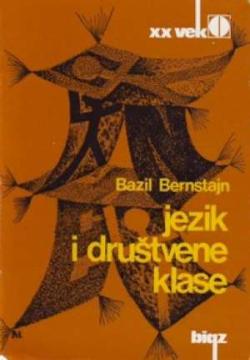
Jezik i društvene klase
One copy is available
- Underlined with pen/felt pen

One copy is available
Are you interested in another book? You can search the offer using our search engine or browse books by category.
In the book, Todorov examines the relationship between the production of discourse (rhetoric) and its interpretation (hermeneutics), focusing on verbal symbolism – the phenomenon of indirect meaning that builds on direct, literal meaning.
The book is still required reading at philological faculties today because it systematically connects language with literature and social context for the first time. It is written clearly, without ideological exclusivity, which was a rarity in 1990.
Words are like people: they are born, grow, travel, cross the borders of municipalities, provinces and states, adapt, change nationality and citizenship, reproduce, age and die, and – unlike people, similar to gods – they can also be resurrected.
The Grammar of the Croatian or Serbian Literary Language (first ed. 1899, third 1963, Matica hrvatska) is a classic normative grammar of the Štokavian (Vukonian) type: sounds, forms, word formation, syntax.
In this book, Ivo Pranjković (b. 1947), one of the most influential contemporary Croatian linguists, brings a lucid, polemical and chronicling panorama of Croatian linguistics from the mid-20th century to the early 1990s.
In his lecture Linguistics and Poetics, Russian-American linguist Roman Jakobson (1896–1982) explores the relationship between language and literature, arguing that poetics is a subdivision of linguistics that deals with what makes a verbal message a work