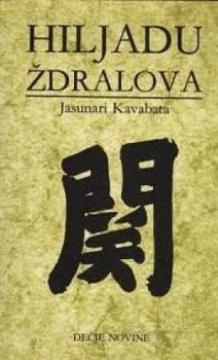
Hiljadu ždralova

Hiljadu ždralova

Jasunari Kavabata

The tea ceremony, arranging flowers, arranging gardens and the art of creating beautiful porcelain stand in the background of this novel as symbols of the eternal and timeless in human creativity.

Human feelings, in contrast to artistic creativity, are shown as momentary, fragile, changeable and transitory. In this contrast between man and art, Kawabata wove the subtle and delicate plot of the novel. The main character, Kikudi, is a victim of his childhood memories and fails to occupy a certain position in reality. After the death of his father and mother, he is looking for fresh and pure love, but he cannot get rid of the dark memories from his childhood. Then he falls fatally in love with his father's former lover, Mrs. Ota, who represents a bridge between the past and the present. Overwhelmed by remorse and guilt, Mrs. Ota commits suicide. After her death, Kikudi cannot get rid of his longing for the deceased, but gradually his love for his mother is transferred to her daughter Fumiko. The end of the novel is uncertain because Fumiko is also overcome with guilt and cannot openly accept Kikudi's love.

Naslov izvornika
Sembazuru
Prijevod
Dejan Razić
Urednik
Ljiljana Novaković
Dimenzije
20 x 12,5 cm
Broj strana
139
Nakladnik
Dečje novine, Gornji Milanovac, 1989.
 
Tiraž: 3.000 primjeraka
 
Latinica. Broširano.
Jezik: Hrvatski.

Jedan primjerak je u ponudi

Stanje:Korišteno, u vrlo dobrom stanju
Oštećenja / nepogodnosti:
  • Slight damage to the cover
Dodano u košaricu!
 

Zanima Vas i neka druga knjiga? Možete pretražiti našu ponudu pomoću tražilice ili prelistati knjige po kategorijama.

Možda će Vas zanimati i ovi naslovi

V.

V.

Thomas Pynchon

The novel represents a journey into an alternative world – a world that we all belong to from time to time, but of which we would not want to be a part, a world of paranoia and alienation that we are not entirely sure is just an alternative or the bare tr

Čarobna knjiga, 2010.
Srpski. Latinica. Broširano.
21,98
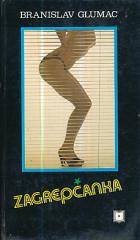
Zagrepčanka

Zagrepčanka

Branislav Glumac

Branislav Glumac published a novel without periods or commas in 1974, as the relentless stream of thought of a young rebel. Published in socialist Yugoslavia, the work caused a scandal with its openness and became a classic about generational rebellion.

IROS, 1986.
Hrvatski. Latinica. Tvrde korice.
8,22 - 8,24
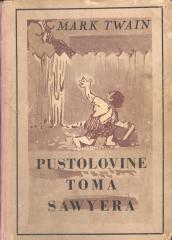
Pustolovine Toma Sawyera

Pustolovine Toma Sawyera

Mark Twain

The Adventures of Tom Sawyer is the first truly realistic children's novel, not only in American but also in world children's literature. Twain's most famous work and a favorite children's book in which the writer described his boyhood experiences.

Nakladni zavod Hrvatske, 1947.
Hrvatski. Latinica. Tvrde korice.
16,32
Proces

Proces

Franz Kafka

Kafka wrote The Process between 1914 and 1915, published posthumously in 1925. The novel is unfinished but with an added final chapter by Max Brod. Edition with a foreword by B. Živojinović and an afterword by Walter Killi.

BIGZ, 1990.
Srpski. Latinica. Broširano.
4,26
Crna kutija

Crna kutija

Amos Oz

The Black Box is a kaleidoscope of married life and love relationships. It is a novel that implicitly speaks about all of us.

Hena Com, 2001.
Hrvatski. Latinica. Tvrde korice.
10,98
Deobe 1-3

Deobe 1-3

Dobrica Ćosić

This work, awarded the NIN Prize for that year, is considered one of the most significant in Serbian literature after World War II.

Prosveta, 1961.
Srpski. Ćirilica. Tvrde korice s ovitkom.
Knjiga se sastoji od tri toma
11,42