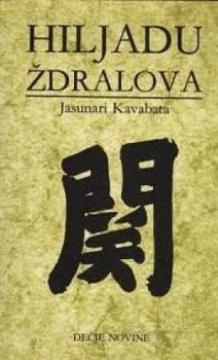
Hiljadu ždralova

Hiljadu ždralova

Jasunari Kavabata

The tea ceremony, arranging flowers, arranging gardens and the art of creating beautiful porcelain stand in the background of this novel as symbols of the eternal and timeless in human creativity.

Human feelings, in contrast to artistic creativity, are shown as momentary, fragile, changeable and transitory. In this contrast between man and art, Kawabata wove the subtle and delicate plot of the novel. The main character, Kikudi, is a victim of his childhood memories and fails to occupy a certain position in reality. After the death of his father and mother, he is looking for fresh and pure love, but he cannot get rid of the dark memories from his childhood. Then he falls fatally in love with his father's former lover, Mrs. Ota, who represents a bridge between the past and the present. Overwhelmed by remorse and guilt, Mrs. Ota commits suicide. After her death, Kikudi cannot get rid of his longing for the deceased, but gradually his love for his mother is transferred to her daughter Fumiko. The end of the novel is uncertain because Fumiko is also overcome with guilt and cannot openly accept Kikudi's love.

Original title
Sembazuru
Translation
Dejan Razić
Editor
Ljiljana Novaković
Dimensions
20 x 12.5 cm
Pages
139
Publisher
Dečje novine, Gornji Milanovac, 1989.
 
Distribution: 3,000 copies
 
Latin alphabet. Paperback.
Language: Croatian.

One copy is available

Condition:Used, very good condition
Damages or inconvenience notice:
  • Slight damage to the cover
 

Are you interested in another book? You can search the offer using our search engine or browse books by category.

You may also be interested in these titles

Rudnik čvaraka

Rudnik čvaraka

Tomislav Šovagović

The debut work of Croatian writer Tomislav Šovagović, awarded the Josip and Ivan Kozarac Award in 2012, is a dedication to Slavonia – the region of his childhood that the author, born in Dalmatia, observes with foreign but tender eyes.

Mozaik knjiga, 20112.
Croatian. Latin alphabet. Paperback.
11.56
Skandal na simpoziju

Skandal na simpoziju

Pavao Pavličić
Logos, 1985.
Croatian. Latin alphabet. Hardcover with dust jacket.
4.72 - 4.98
Zagrepčanka

Zagrepčanka

Branislav Glumac

Branislav Glumac published a novel without periods or commas in 1974, as the relentless stream of thought of a young rebel. Published in socialist Yugoslavia, the work caused a scandal with its openness and became a classic about generational rebellion.

IROS, 1986.
Croatian. Latin alphabet. Hardcover.
8.24
Strasti i druge pripovijetke

Strasti i druge pripovijetke

Isaac Bashevis Singer

Winner of the Nobel Prize for Literature in 1978, Isaac Bashevis Singer is a prolific writer of novellas and short stories. And in this collection of short stories, the author's penchant for mysticism, grotesque, folklore and eroticism is expressed.

Svjetlost, 1986.
Croatian. Latin alphabet. Hardcover with dust jacket.
6.42
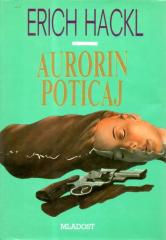
Aurorin poticaj

Aurorin poticaj

Erich Hackl

The work is based on a true event that occurred in Spain in 1933: Aurora Rodriguez killed her daughter Hildegart, a famous fighter for women's emancipation and a cult figure on the political scene of the time.

Mladost, 1990.
Croatian. Latin alphabet. Hardcover with dust jacket.
4.96 - 4.98
Proces

Proces

Franz Kafka

Kafka wrote The Process between 1914 and 1915, published posthumously in 1925. The novel is unfinished but with an added final chapter by Max Brod. Edition with a foreword by B. Živojinović and an afterword by Walter Killi.

BIGZ, 1990.
Serbian. Latin alphabet. Paperback.
4.26