Arthur C. Clarke
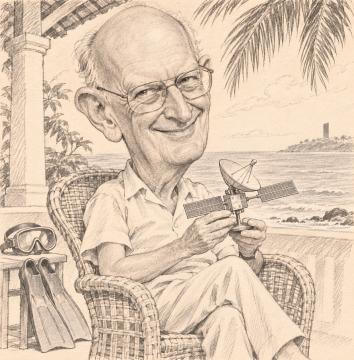
Arthur Charles Clarke (Minehead, 16 December 1917 – Colombo, 19 March 2008) was a British writer, science communicator and a major figure in twentieth-century science fiction. Together with Isaac Asimov and Robert A. Heinlein, he is commonly counted among the genre’s “Big Three”. Raised in Somerset, he served as a radar specialist in the Royal Air Force during the Second World War. He graduated in mathematics and physics from King’s College London in 1948.
His 1945 article Extra-Terrestrial Relays outlined a system of global telecommunications using satellites in geostationary orbit, anticipating their practical deployment by decades. The same combination of technical knowledge and imaginative speculation shaped his fiction, which explores spaceflight, artificial intelligence and encounters with beings far beyond human comprehension.
His early novels include Prelude to Space and The Sands of Mars (1951), Childhood’s End (1953) and The City and the Stars (1956). These works examine humanity’s future and the unsettling consequences of scientific discovery. Short stories such as The Sentinel, The Nine Billion Names of God and The Star demonstrate his gift for developing a striking premise towards a memorable final revelation.
With Stanley Kubrick, Clarke developed the film and novel 2001: A Space Odyssey (1968) as parallel projects. His later novels include Rendezvous with Rama (1973), Imperial Earth (1975), The Fountains of Paradise (1979) and The Songs of Distant Earth (1986). Both Rendezvous with Rama and The Fountains of Paradise won Hugo and Nebula awards.
Clarke settled in Sri Lanka in 1956, drawn by his enthusiasm for diving and underwater exploration. He also wrote extensively about science and appeared in popular television series. His lasting distinction is the union of scientific plausibility with cosmic wonder: technological progress expands human possibilities while revealing how much remains beyond our understanding.
Naslovi u ponudi
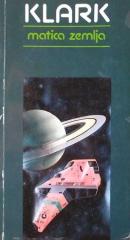
Matica Zemlja
Imperial Earth (1975) is a saga about the colonization of the solar system. The thematic determinants of the novel are determined by extrapolations of scientific hypotheses related to interplanetary travel, and by the SETI program.

Misterije svijeta
A journey through the planet’s mysteries, from yetis, sea monsters and UFOs to stone circles and strange skies, combining eyewitness accounts, investigations and Arthur C. Clarke’s critical commentary.
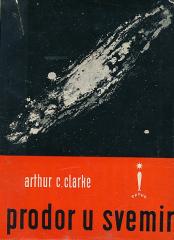
Prodor u svemir
Arthur C. Clarke’s historical and scientific overview of the vision and development of astronautics. The book explores the early history of rocket technology, spaceflight, and the future of human space exploration.
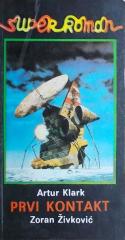
Prvi kontakt
Zoran Živković, an excellent connoisseur of science fiction, made a selection of Clarke's best stories with the motif of first contact and wrote an extensive text in which he interprets them in detail.
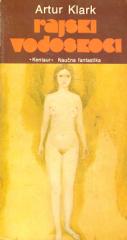
Rajski vodoskoci
Vannemar Morgan's dream of linking Earth with the stars requires a 24,000-mile-high space elevator. But first he must solve a million technical, political, and economic problems while allaying the wrath of God. Includes a new introduction by the author.
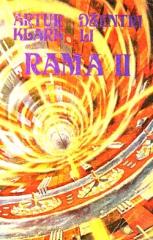
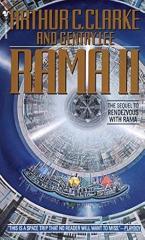
Rama II
The sequel to Rendezvous with Rama: the only SF novel to sweep all SF awards and one of the best sellers of all time.