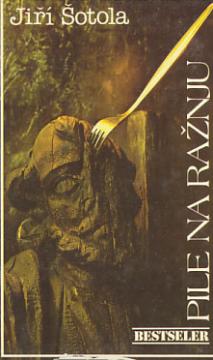
Pile na ražnju

Pile na ražnju

Jiří Šotola

Jiří Šotola's quasi-historical novel Pile on a Spit depicts the absurdity of life through the story of the antihero – the puppeteer Matija Pile (Matěj Kuře), a puppeteer of history during the Napoleonic Wars. The novel criticizes totalitarianism through b

In the maelstrom of the Napoleonic Wars, the forty-year-old peasant Matija Pila deserts the Battle of Marengo in 1800, flees to Carinthia and joins the acrobats, seeking freedom in jumping. He is haunted by the memory of La Tournesse's love; under the false name Luigi Sevastiano he seeks refuge in the castle of Count Waldstein near Litomyšl, but fails in the Don Juan exercises – his trousers fall off – and flees to the Piarists with Father Prospero. There he talks to spirits, God and dolls who whisper about his broken soul, steals them and continues to wander as an eternal slave of chaos.

He returns home: his brother Lukaš, a greedy drunkard who abuses his stepdaughter Barbara, suspects him of the inheritance. Matija becomes attached to her, takes her away from violence with him and the dolls. They travel and earn money by performing, but Barbara dies in childbirth, leaving him a son. Matija becomes a vagabond, the dolls come to life, revealing the depths of the mind; obtains a false passport (Ondřej Serenus), but is recalled to the army for Slavkov 1805 – The French kill the puppets, mixing worlds. He dies in straw, surrounded by ghosts, with a longing for freedom in small moments.

Matija is an antihero, a victim of the vortex that breaks man against great powers (Napoleon as the framework of totalitarianism). Šotola celebrates escape into the inner world: conversations mock faith and celebrate strength in self-confidence. The story mixes the sublime and the crude, the real and the imaginative in a circular story of 33 chapters, full of irony. Like Kafka and Hrabal, Šotola warns against the deceptions of authority and power.

Naslov izvornika
Kuře na rožni
Prijevod
Dagmar Ruljančić
Urednik
Dragan Milković
Naslovnica
Nenad Dogan
Dimenzije
19,5 x 12 cm
Broj strana
279
Nakladnik
August Cesarec, Zagreb, 1983.
 
Latinica. Tvrde korice s ovitkom.
Jezik: Hrvatski.

Dva primjerka su u ponudi

Primjerak broj 1

Stanje:Korišteno, u odličnom stanju
Dodano u košaricu!

Primjerak broj 2

Stanje:Korišteno, u odličnom stanju
Oštećenja / nepogodnosti:
  • Traces of patina
Dodano u košaricu!
 

Zanima Vas i neka druga knjiga? Možete pretražiti našu ponudu pomoću tražilice ili prelistati knjige po kategorijama.

Možda će Vas zanimati i ovi naslovi

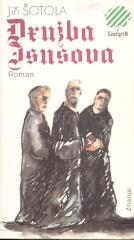
Družba Isusova

Družba Isusova

Jiří Šotola
Znanje, 1988.
Hrvatski. Latinica. Broširano.
4,00
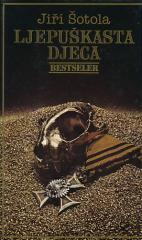
Ljepuškasta djeca

Ljepuškasta djeca

Jiří Šotola

Roman Ljepuškasta djeca prikazuje svijet adolescentnih buntovnika u "reedukacijskoj" koloniji – zatvoru maskiranom kao škola. Napisano u duhu praškog proljeća, djelo kritizira komunistički sustav kroz dinamičnu, filmsku naraciju.

August Cesarec, 1986.
Hrvatski. Latinica. Tvrde korice s ovitkom.
4,82 - 4,84
Družba Isusova

Družba Isusova

Jiří Šotola

Družba Isusova (1969.) Jiříja Šotole, prvijenac češkog pjesnika, povijesni je roman smješten u doba protureformacije, koji suptilno aludira na suvremene prilike u Čehoslovačkoj pod komunizmom.

Znanje, 1975.
Hrvatski. Latinica. Tvrde korice s ovitkom.
2,98 - 4,26
Osječka pričaonica

Osječka pričaonica

Ljerka Antonić
Glas Slavonije, 1995.
Hrvatski. Latinica. Broširano.
6,98
Mrtve duše

Mrtve duše

Nikolaj Vasiljevič Gogolj

Dead Souls (1842) is a brilliant satire that exposes the moral and social rot of imperial Russia through Chichikov's fraud with dead serfs, with Gogol's virtuoso mix of humor, irony and lyricism.

Veselin Masleša, 1969.
Hrvatski. Latinica. Tvrde korice s ovitkom.
6,98
Za Europu spremni

Za Europu spremni

Arijana Čulina

Za Europu spremni Arijane Čuline zbirka je satiričnih kolumni koje duhovito seciraju hrvatsko društvo i njegove apsurdne političke i kulturne fenomene u kontekstu priprema za ulazak u Europsku uniju.

Slobodna Dalmacija, 2004.
Hrvatski. Latinica. Broširano.
3,62 - 3,74