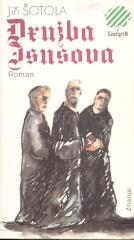
Družba Isusova

Družba Isusova

Jiří Šotola

The Society of Jesus (1969) by Jiří Šotola, the debut work of the Czech poet, is a historical novel set during the Counter-Reformation, which subtly alludes to contemporary conditions in Czechoslovakia under communism.

The plot follows Father Vojtěch Had and Countess Maria Maximiliana, whose fates intertwine in the conflict between the individual and the powerful Catholic Jesuit order. The novel explores themes of obedience, ideological oppression, and the loss of spiritual and human freedom.

Vojtěch Had, a Jesuit priest, is faced with an internal conflict between his conscience and the strict rules of the order, where obedience is the highest value. Countess Maria Maximiliana, passionate and rebellious, comes into conflict with the church hierarchy, which leads to her spiritual and physical downfall. Their paths lead to a tragic end, where ideology suffocates humanity, leaving them as "empty bodily shells". The novel is dark, with a heavy atmosphere, but also layered narrative and dialogues that emphasize moral dilemmas.

Šotola masterfully uses historical context to criticize totalitarian systems, making the novel universal. Croatian critic Ljudevit Bauer compared it to the novel Dervish and the Death of Meša Selimović due to its similar themes of the conflict between the individual and the system. Published in 1975 in Croatia, the novel received critical acclaim and was adapted into a film in 2004, directed by Silvij Petranović.

Naslov izvornika
Tovaryšstvo ježišovo
Prijevod
Nikola Kršić
Urednik
Zlatko Crnković
Naslovnica
Alfred Pal
Dimenzije
19,5 x 12 cm
Broj strana
379
Nakladnik
Znanje, Zagreb, 1975.
 
Latinica. Tvrde korice s ovitkom.
Jezik: Hrvatski.

Jedan primjerak je u ponudi

Stanje:Korišteno, u vrlo dobrom stanju
Oštećenja / nepogodnosti:
  • Nedostaje omot
  • Tragovi patine
Dodano u košaricu!
 

Zanima Vas i neka druga knjiga? Možete pretražiti našu ponudu pomoću tražilice ili prelistati knjige po kategorijama.

Možda će Vas zanimati i ovi naslovi

Družba Isusova

Družba Isusova

Jiří Šotola

„Družba Isusova“ (1969) Jiržija Šotole, debitantsko delo češkog pesnika, je istorijski roman smešten u vreme kontrareformacije, koji suptilno aludira na savremene uslove u Čehoslovačkoj pod komunizmom.

Znanje, 1988.
Hrvatski. Latinica. Broširano.
4,00 - 4,20
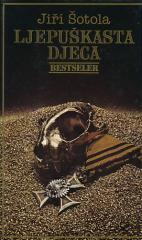
Ljepuškasta djeca

Ljepuškasta djeca

Jiří Šotola

Roman „Lepuškasta deca“ prikazuje svet adolescentnih pobunjenika u „prevaspitnoj“ koloniji – zatvoru prerušenom u školu. Napisano u duhu Praškog proleća, delo kritikuje komunistički sistem kroz dinamičnu, filmsku naraciju.

August Cesarec, 1986.
Hrvatski. Latinica. Tvrde korice s ovitkom.
4,82 - 4,84
Dok vrijeme prolazi

Dok vrijeme prolazi

Michael Walsch

Majkl Volšov film „Kako vreme prolazi“ nastavlja i proširuje priču filma „Kazablanka“, prateći sudbine Rika, Ilse i drugih likova tokom Drugog svetskog rata kroz ljubav, rat i opasne misije.

Znanje, 1999.
Hrvatski. Latinica. Broširano.
4,36
Bogataš i siromah

Bogataš i siromah

Irwin Shaw

„Die Reichen und die Armen“ von Irwin Shaw ist ein Familienroman, der den Lebenswegen der drei Kinder der Familie Jordache folgt. Die Arbeit untersucht Erfolg, Misserfolg, soziale Unterschiede und das Streben nach Glück.

Znanje, 1974.
Hrvatski. Latinica. Tvrde korice s ovitkom.
5,62
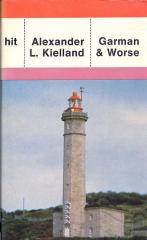
Garman & Worse

Garman & Worse

Alexander L. Kielland

Alexander Kielland's Garman & Worse is a social novel about a wealthy merchant family in a Norwegian port city. Through their fates, the author criticizes the hypocrisy, class differences, and moral dilemmas of bourgeois society.

Znanje, 1985.
Hrvatski. Latinica. Tvrde korice s ovitkom.
5,48
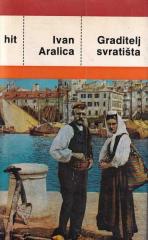
Graditelj svratišta

Graditelj svratišta

Ivan Aralica

The inn builder is a realistic historical novel, in the tradition of Andrić, but with elements of fantasy that connect Aralica with the oral Croatian literary word, but also with the fantastic literature of Gabriel García Marques, for example.

Znanje, 1987.
Hrvatski. Latinica. Tvrde korice s ovitkom.
7,265,08