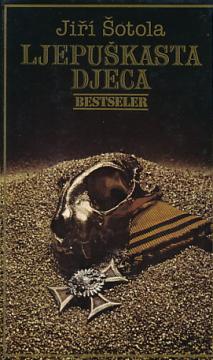
Ljepuškasta djeca

Ljepuškasta djeca

Jiří Šotola

The novel Beautiful Children depicts the world of adolescent rebels in a "re-education" colony - a prison disguised as a school. Written in the spirit of the Prague Spring, the work criticizes the communist system through a dynamic, cinematic narrative.

In the 1950s, a group of "pretty children" - young girls and boys convicted of petty offenses (theft, running away from home) - arrive at a special institution in the Czechoslovak countryside. The main narrator, a teenager with street instincts, meets eccentric companions: a rebellious girl with artistic dreams, a cynic who mocks "pedagogical" lessons, and a quiet dreamer. They are ruled by a bureaucratic hierarchy, overseers who "fatten" them up for obedience through parades, fake workshops, and moral sermons about socialism.

Everyday life is absurd: morning exercises under an alarm clock, "re-education" meetings where "mistakes" are confessed, but also secret clubs where children share stories of freedom. An escape attempt by one character sets off a chain reaction - the octopuses of the authorities (police, courts) catch the "fugitives" on false charges. The climax is a rebellion: the children burn down the barracks, facing the violence of the system. The novel ends openly – freedom for some, a return to the cycle for others.

Prison as a metaphor for society – "a prison that is not" stifles individuality with bureaucracy and indoctrination. Training obedience vs. the natural rebelliousness of youth; a dying regime that writhes under absurd laws. Šotola mixes humor, irony and tragedy, reminiscent of Kafka: the truth hurts, but it sets you free. The work celebrates children's energy against the machine of evil, warning of the dangers of fanaticism.

Exceptionally dynamic, it is recommended for fans of social satire such as Kundera or Hrabal's early works.

Original title
Malovany deti
Translation
Dagmar Ruljančić
Editor
Zdravko Židovec
Graphics design
Nenad Dogan
Dimensions
19.5 x 12 cm
Pages
236
Publisher
August Cesarec, Zagreb, 1986.
 
Latin alphabet. Hardcover with dust jacket.
Language: Croatian.
ISBN
8-63-930011-9

Two copies are available

Copy number 1

Condition:Used, excellent condition

Copy number 2

Condition:Used, excellent condition
 

Are you interested in another book? You can search the offer using our search engine or browse books by category.

You may also be interested in these titles

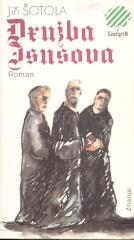
Družba Isusova

Družba Isusova

Jiří Šotola
Znanje, 1988.
Croatian. Latin alphabet. Paperback.
4.00
Družba Isusova

Družba Isusova

Jiří Šotola

Družba Isusova (1969.) Jiříja Šotole, prvijenac češkog pjesnika, povijesni je roman smješten u doba protureformacije, koji suptilno aludira na suvremene prilike u Čehoslovačkoj pod komunizmom.

Znanje, 1975.
Croatian. Latin alphabet. Hardcover with dust jacket.
2.98 - 4.26
Pokojni Matija Pascal

Pokojni Matija Pascal

Luigi Pirandello

Roman Luiđija Pirandela „Pokojni Matijas Paskal“ (1904), remek-delo italijanske književnosti, istražuje teme identiteta, slobode i društvenih konvencija kroz tragičnu, ali ironičnu priču o čoveku koji pokušava da pobegne od svog života.

Matica hrvatska, 1927.
Croatian. Latin alphabet. Hardcover.
3.98
Društveni tipovi - ogledalo mana i slabosti ljudskih

Društveni tipovi - ogledalo mana i slabosti ljudskih

Hugo Krishaber

U ovoj knjizi autor se na šaljiv način i u stihu pozabavio različitim tipovima ljudskog karaktera, kojih nalazi 143, ismijavajući njihove mane. Zanimljiv primjerak esekerske knjige, trenutno jedini na tržištu.

Samizdat, 1938.
Croatian. Latin alphabet. Paperback.
17.26
Mrtve duše

Mrtve duše

Nikolaj Vasiljevič Gogolj

„Die toten Seelen“ (1842) ist eine brillante Satire, die den moralischen und sozialen Verfall des zaristischen Russlands durch Tschitschikows Betrug mit toten Leibeigenen aufdeckt, mit Gogols virtuoser Mischung aus Humor, Ironie und Lyrik.

Jutarnji list, 2004.
Croatian. Latin alphabet. Paperback.
4.99
Clochemerle Babilon: Svezak drugi

Clochemerle Babilon: Svezak drugi

Gabriel Chevallier

Drugi nastavak, objavljen 1951. godine, Chevalliereovog satiričnog romana Clochemerle iz 1934. godine.

Zora, 1967.
Croatian. Latin alphabet. Hardcover with dust jacket.
3.72