Čovjekov položaj u kozmosu

Čovjekov položaj u kozmosu

Max Scheler

Man, as a spiritual being, constantly resides in the difference between essence and existence. Without such a distinction, there would be no philosophy, ethics, art... He who refuses such insight makes man, and without knowing it, an animal.

Questions: "What is man and what is his position in battle?" already from the first awakening of his philosophical consciousness, he was occupied more strongly than any other philosophical question. Thus, we have natural scientific, philosophical, and theological anthropology, which are not compatible with each other - "but we do not have a unique idea about man." The multitude of special sciences, the number of which is constantly growing, and which deal with man, no matter how valuable they are, obscure the essence of man much more than they illuminate it. Man's special position can become clear to us only when we look at the entire structure of the biopsychic world.

Max Scheler (1874-1928) German philosopher. He was a professor in Cologne and Frankfurt. Studying primarily ethical and anthropological issues, he became the most significant representative of Husserl's phenomenological school. He influenced the development of contemporary ethics and axiology, and his influence is particularly visible in the work of N. Hartmann. In his main work "Formalism in Ethics" and "Material Value Ethics" he refutes Kant's formalism.

Naslov originala
Die Stellung des Menschen im Kosmos
Prevod
Marinko Mišković
Urednik
Petar Bujas
Dimenzije
21 x 13 cm
Broj strana
158
Izdavač
Fabula nova, Zagreb, 2005.
 
Latinica. Tvrde korice s omotom.
Jezik: Hrvatski.

Nema primeraka u ponudi

Poslednji primerak je nedavno prodat.

 

Zanima Vas i neka druga knjiga? Možete pretražiti našu ponudu pomoću pretrage ili prelistati knjige po kategorijama.

Možda će Vas zanimati i ovi naslovi

Gotski križ

Gotski križ

Žarko Paić
Ceres, 1997.
Hrvatski. Latinica. Broširano.
6,24 - 6,99
Politički liberalizam

Politički liberalizam

John Rawls

John Rawls, the founder of modern liberalism, offers a roadmap for a stable society: "Political Liberalism," a sequel to the classic "A Theory of Justice," is not just a philosophical treatise, but a practical model for pluralistic societies like ours.

Kruzak, 2000.
Hrvatski. Latinica. Broširano.
32,56
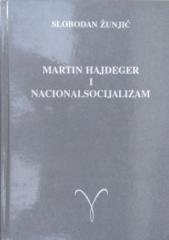
Martin Hajdeger i nacionalsocijalizam

Martin Hajdeger i nacionalsocijalizam

Slobodan Žunjić

Slobodan Žunjić, in his book Martin Heidegger and National Socialism (1992), explores in detail the connection between Martin Heidegger's philosophy and his involvement in the Nazi regime.

Književna zajednica Novog Sada, 1992.
Srpski. Latinica. Tvrde korice.
12,62
Sosir - osnivač moderne lingvistike

Sosir - osnivač moderne lingvistike

Jonathan Culler

Jonathan Culler, an American literary and structuralist theorist, presents Ferdinand de Saussure in this classic study as the father of modern linguistics – a thinker who, along with Freud and Durkheim, revolutionized the study of man and society.

Biblioteka XX vek, 1980.
Srpski. Latinica. Broširano.
7,46
Fenomenologija

Fenomenologija

Jean-Francois Lyotard

Lyotard's phenomenology focuses on the analysis of experience before conceptualization. For him, it is crucial to understand how an event, feeling, or stimulus appears in consciousness before language and social norms shape it into stable meanings.

BIGZ, 1980.
Srpski. Latinica. Broširano.
7,55
Foucault

Foucault

Gilles Deleuze

Deleuze's Portrait of Foucault (1986) is not a monograph, but a creative "thinking with Foucault." It analyzes the archaeology of knowledge, introducing the concepts of archive, power, subjectification, and "fold" as crucial to Foucault's thought on knowl

Sandorf, 2023.
Hrvatski. Latinica. Broširano.
11,86