Luča mikrokozma
Antikvitet
Retka knjiga

Luča mikrokozma

Petar Petrović-Njegoš

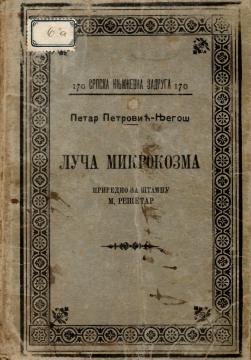
Philosophical-religious poem by Petar II Petrović Njegoš (1845) about the soul, the cosmos, the fall of angels and human destiny. The cosmic flight of the soul and a biblical-mythological account of the struggle between good and evil, published by SKZ in

The Light of the Microcosm by Peter II Petrović Njegoš (1813–1851) is one of the most significant and philosophical works of Serbian and South Slavic literature. It was originally published in 1845 in Belgrade, and this 1923 edition was prepared for publication by the prominent philologist and linguist Milan Rešetar (1860–1942).

The book contains Rešetar's philological work, a dictionary of uncommon words, and a significant study "Philosophy in the 'Light of the Microcosm'" by Branislav Petronijević, one of the leading Serbian philosophers of the time. Petronijević's preface interprets Njegoš's thought in the context of philosophy, religion, and metaphysics, emphasizing the depth of the poet's speculative genius.

The work is written in decameter, in six cantos (cantos), with a dedication to Sima Milutinović Sarajlija. Genre-wise, it belongs to romantic philosophical poetry with elements of cosmic vision, theodicy and mythological-religious epic. The plot begins with dedication and introspection, followed by the cosmic flight of the poet's soul (luče) through the cosmic spheres in search of answers about the origin and destiny of man. The second part describes Satan's rebellion against God, the fall of the angels and the fall of Adam, and human imprisonment in the material world. Njegoš combines Christian tradition (especially the motif of the fallen angel and original sin), Manichaean dualistic ideas and romantic individualism into an original synthesis.

The central themes are: the immortality of the soul, the conflict between light and darkness, freedom of will, suffering as a consequence of sin, man as a divine spark in the dust of death and the search for meaning in the universe. The style is sublime, picturesque and metaphysically dense, with a rich use of natural symbols, celestial bodies and biblical motifs. Here, Njegoš reaches the peak of his religious-philosophical poetry, deeper and more speculative than in Gorski vijenc.

Rešetar's edition from 1923 is important because it standardized the text for a wider audience in the interwar period, with philological precision and Petronijević's philosophical commentary. It contributed to the canonization of the work as the pinnacle of Njegoš's thought lyrics. Luča mikrokosma is a key work for understanding Njegoš not only as a poet and bishop, but also as an original thinker who combined Orthodox spirituality, Western philosophy and romantic genius.

Urednik
Milan Rešetar
Dimenzije
19 x 13 cm
Broj strana
94
Izdavač
Srpska književna zadruga (SKZ), Beograd, 1923.
 
Ćirilica. Tvrde korice.
Jezik: Srpski.

Jedan primerak je u ponudi

Stanje:Korišćeno, u dobrom stanju (tragovi korišćenja)
Oštećenja / nepogodnosti:
  • Worn covers
  • Library stamp
Dodato u korpu!
 

Zanima Vas i neka druga knjiga? Možete pretražiti našu ponudu pomoću pretrage ili prelistati knjige po kategorijama.

Možda će Vas zanimati i ovi naslovi

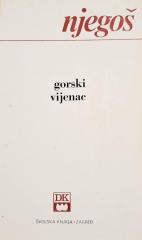
Gorski vijenac

Gorski vijenac

Petar Petrović Njegoš

"Mountain Wreath" is an epic-dramatic work of Peter II. Petrović Njegoš, published in 1847. The plot is set in Montenegro at the end of the 17th century and depicts the struggle of Montenegrins against the Ottomans.

Rad, 1962.
Srpski. Latinica. Broširano.
1,46
Gorski vijenac

Gorski vijenac

Petar Petrović Njegoš

Mountain Wreath is a classic work of Montenegrin national literature of Peter II. Petrović Njegoš, Montenegrin head of state, metropolitan and poet.

Svjetlost, 1970.
Hrvatski. Latinica. Tvrde korice.
3,98
Gorski vijenac

Gorski vijenac

Petar Petrović Njegoš

"Mountain Wreath" is an epic-dramatic work of Peter II. Petrović Njegoš, published in 1847. The plot is set in Montenegro at the end of the 17th century and depicts the struggle of Montenegrins against the Ottomans.

Nolit, 1971.
Srpski. Latinica. Broširano.
3,90
Pjesme iz UNICEF-sveske

Pjesme iz UNICEF-sveske

Emina Kovačević

Emina Kovačević (b. 1995, Jablanica, raised in Mostar) debuted with the collection Poems from a UNICEF Notebook. The title alludes to the blue UNICEF notebook from her childhood – a symbol of humanitarian aid, the post-war period, and her first writing.

Vrijeme, 2022.
Hrvatski. Latinica. Broširano.
4,38
Ja se ne bojim

Ja se ne bojim

Lucija Zmijanović

The songs are about growing up, overcoming fears, and building one's own identity. The work emphasizes the importance of support, friendship, and inner strength.

Urednik d.o.o, 2014.
Hrvatski. Latinica. Tvrde korice.
6,98
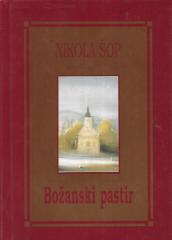
Božanski pastir

Božanski pastir

Nikola Šop

The book contains a selection of Šop's poetry and prose, the play The Eternal Prelude, Šop's letters to Dragutin Tadijanović, and memories of his acquaintance with Francis Jammes. The selection was compiled and the foreword written by Branimir Donat.

Mozaik knjiga, 1997.
Hrvatski. Latinica. Tvrde korice s omotom.
18,56