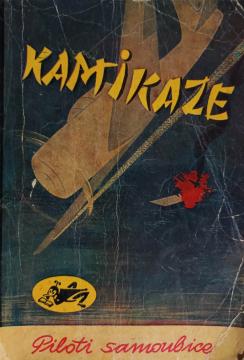
Kamikaze – Piloti samoubice

Kamikaze – Piloti samoubice

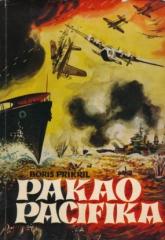
Vagenhals, known for his work on East Asian history and translations of Japanese texts, prepared this compilation as one of the first Yugoslav studies on the Japanese Tokkōtai special attack units in the final phase of the Pacific War.

Vagenhals dispels the myth of the “suicide fanatics”: many of the pilots (mostly students aged 19–22 from universities in Tokyo and Kyoto) were volunteers under pressure from the military hierarchy and bushidō culture, but also forcibly recruited due to lack of resources. The chronology begins with the concept at the Battle of Leyte (October 1944), where Admiral Takaji Onishi approved the tactic. It traces the organization: air (Ohka missiles), sea (Kaiten torpedoes) and ground (Shinyō boats, Fukuryu dive mines) units, with training of only 25–30 days instead of the standard 100.

The book describes the 11 main waves of attacks up to August 1945, with a focus on personal stories: the pilots wrote haiku poems, farewell letters to their families and tied hachimaki scarves like samurai. Vagenhals cites statistics: about 3,800 pilots killed (2,500 naval, 1,300 army), 368 Allied ships damaged/sunk (47 sunk), with an efficiency of 14–17%. The work also includes translations of orders, diaries, and analyses of Japanese propaganda.

Set in the context of 1955, after de-Stalinization and Yugoslav neutrality, the work neutrally illuminates war crimes and despair, avoiding sensationalism. This is a precursor to Vagenhals' later editions on the same subject, but the 1955 original remains a rarity, emphasizing the universal theme of sacrifice in totalitarian wars. Praised for its precision and humane approach.

Urednik
Reuf Bravo
Naslovnica
Slobodan Bogojević
Dimenzije
16,5 x 11 cm
Broj strana
224
Nakladnik
Džepna knjiga, Sarajevo, 1955.
 
Latinica. Broširano.
Jezik: Srpski.

Jedan primjerak je u ponudi

Stanje:Korišteno, u dobrom stanju (tragovi korištenja)
Oštećenja / nepogodnosti:
  • Yellowed pages
  • Traces of patina
Dodano u košaricu!
 

Zanima Vas i neka druga knjiga? Možete pretražiti našu ponudu pomoću tražilice ili prelistati knjige po kategorijama.

Možda će Vas zanimati i ovi naslovi

Svjedok (ne)vremena

Svjedok (ne)vremena

Branimir Lukšić

The book is both a personal and social testimony to the turbulent times the Croatian people went through, especially during the 20th century.

Matica hrvatska, 1998.
Hrvatski. Latinica. Broširano.
8,14
"Enigma" do pobjede

"Enigma" do pobjede

Ilija Marinković

The story of three Polish mathematicians who cracked the German Enigma cipher machine in the 1930s. Their secret work allowed the Allies to read Nazi messages during the war, shortening it by years and saving millions of lives.

NIŠRO "Vjesnik", 1977.
Hrvatski. Latinica. Tvrde korice.
6,32
Tu nema ničega!

Tu nema ničega!

Dubravka Ugrešić

In her provocative essay, Dubravka Ugrešić considers life in post-socialist Europe and Croatia using the example of spas.

Multimedijalni institut, 2020.
Hrvatski. Latinica. Broširano.
13,58
Što je Opus Dei? Priče o Bogu, krvi, novcu i vjeri

Što je Opus Dei? Priče o Bogu, krvi, novcu i vjeri

Noam Friedlander

The Catholic movement Opus Dei, founded in 1928 in Spain as a small devout group, is today one of the most influential and richest church organizations in the world – with millions of members, a headquarters in New York worth billions, and branches across

Naklada Ljevak, 2005.
Hrvatski. Latinica. Tvrde korice.
13,26
Stoljeće rata: Anglo-američka naftna politika i novi svjetski poredak

Stoljeće rata: Anglo-američka naftna politika i novi svjetski poredak

Frederick William Engdahl

The author finds the causes of international conflicts and wars in attempts to control money and energy resources. The book sheds light on the hidden principles and leading circles of East and West that were behind the events until the end of the Cold War

AGM, 2000.
Hrvatski. Latinica. Broširano.
12,56
Hrvatska borba za opstojnost 1918.-1998.

Hrvatska borba za opstojnost 1918.-1998.

Milivoj Kujundžić, Zdravko Dizdar

The book contains an account of the history of Croatia from 1918 to 1998 in four historical periods (1918-1941; 1941-1945, 1945-1990 and 1990-1998).

Hrvatski državni sabor, 2000.
Hrvatski. Latinica. Tvrde korice.
6,42