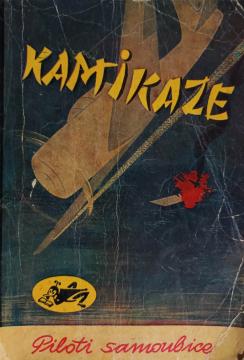
Kamikaze – Piloti samoubice
Vagenhals, known for his work on East Asian history and translations of Japanese texts, prepared this compilation as one of the first Yugoslav studies on the Japanese Tokkōtai special attack units in the final phase of the Pacific War.
Vagenhals dispels the myth of the “suicide fanatics”: many of the pilots (mostly students aged 19–22 from universities in Tokyo and Kyoto) were volunteers under pressure from the military hierarchy and bushidō culture, but also forcibly recruited due to lack of resources. The chronology begins with the concept at the Battle of Leyte (October 1944), where Admiral Takaji Onishi approved the tactic. It traces the organization: air (Ohka missiles), sea (Kaiten torpedoes) and ground (Shinyō boats, Fukuryu dive mines) units, with training of only 25–30 days instead of the standard 100.
The book describes the 11 main waves of attacks up to August 1945, with a focus on personal stories: the pilots wrote haiku poems, farewell letters to their families and tied hachimaki scarves like samurai. Vagenhals cites statistics: about 3,800 pilots killed (2,500 naval, 1,300 army), 368 Allied ships damaged/sunk (47 sunk), with an efficiency of 14–17%. The work also includes translations of orders, diaries, and analyses of Japanese propaganda.
Set in the context of 1955, after de-Stalinization and Yugoslav neutrality, the work neutrally illuminates war crimes and despair, avoiding sensationalism. This is a precursor to Vagenhals' later editions on the same subject, but the 1955 original remains a rarity, emphasizing the universal theme of sacrifice in totalitarian wars. Praised for its precision and humane approach.
Multiple copies are available
Copy number 2
- Traces of patina
Copy number 3
- Yellowed pages
- Traces of patina