Smrt u Veneciji

Smrt u Veneciji

Thomas Mann
Mann

Thomas Mann's novella *Death in Venice* follows the writer Gustav von Aschenbach, whose obsession with the beauty of the young Tadzio during his stay in Venice leads to an inner breakdown and a tragic fate.

Death in Venice (Der Tod in Venedig, 1912) is a renowned novella by the German writer and Nobel laureate Thomas Mann, and one of the most significant works of European modernism. The work explores the conflict between reason and passion, art and life, discipline and repressed desires, depicting the gradual collapse of a distinguished writer's inner world.

The protagonist, Gustav von Aschenbach, is an acclaimed writer whose life has been defined by strict self-control, hard work, and renunciation. Seeking rest and inspiration, he travels to Venice, where he becomes captivated by the extraordinary beauty of a Polish boy named Tadzio. His admiration gradually evolves into an obsessive fixation on an ideal of beauty, undermining the moral and intellectual foundations of his existence.

As the city grapples with a covert cholera epidemic, Aschenbach sinks ever deeper into a world of longing, self-deception, and inner bondage. Venice—at once magnificent and decadent—becomes a symbol of decay, transience, and inevitable death.

Mann draws upon classical mythology, Platonic philosophy, and Nietzsche’s distinction between the Apollonian and Dionysian principles to craft a multi-layered narrative about the limits of artistic creation and human self-control.

Death in Venice is distinguished by its psychological depth, symbolism, and refined style, while its themes of beauty, desire, aging, and mortality remain enduringly relevant. The novella was adapted into the acclaimed 1971 film by director Luchino Visconti.

Naslov originala
Der Tod in Venedig
Prevod
Zlatko Crnković
Dimenzije
21,5 x 12,5 cm
Broj strana
94
Izdavač
Jutarnji list, Zagreb, 2004.
 
Latinica. Tvrde korice s omotom.
Jezik: Hrvatski.
ISBN
8-49-789665-3

Jedan primerak je u ponudi

Stanje:Korišćeno, u odličnom stanju
Dodato u korpu!
 

Zanima Vas i neka druga knjiga? Možete pretražiti našu ponudu pomoću pretrage ili prelistati knjige po kategorijama.

Možda će Vas zanimati i ovi naslovi

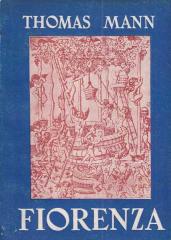
Fiorenza

Fiorenza

Mann
Thomas Mann

Thomas Mann’s *Fiorenza* is a historical drama set in Renaissance Florence that depicts the conflict between the preacher Girolamo Savonarola and Lorenzo de’ Medici, exploring the relationship between art, faith, and power.

Zora, 1955.
Hrvatski. Latinica. Broširano s omotom.
6,42 €
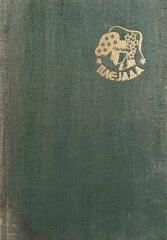
Legende

Legende

Mann
Thomas Mann

Thomas Mann's *Legends* is a collection of three prose works inspired by myth, religion, and folklore. Through stories of love, identity, laws, and temptations, the author explores the contradictions of human nature.

Omladina, 1958.
Srpski. Ćirilica. Tvrde korice.
6,22 €
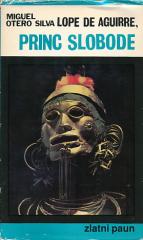
Lope de Aguirre - Princ slobode

Lope de Aguirre - Princ slobode

Miguel Otero Silva

Lope de Aguirre, Princ slobode je odraz postojanja american zajednice and stvaranja velike individualne figure koja u svijetu krvi i prijestupa poprima proporcije pjesničke alegorije.

Otokar Keršovani, 1983.
Hrvatski. Latinica. Tvrde korice s omotom.
8,98 €
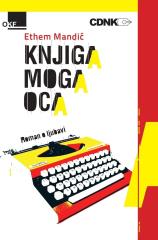
Knjiga moga oca

Knjiga moga oca

Ethem Mandić

This is a biography about my father made up of memories and mere imagination. History does not exist, and neither do facts. The past is unknown.

OKF d.o.o, 2016.
Hrvatski. Latinica. Broširano.
10,64 €
Malena je ime tanga

Malena je ime tanga

Almudena Grandes

If you like raw eroticism like Cloud Atlas, this is a sensual saga – emotional, provocative, for those who want to feel the pulse of forbidden passion! Grandes probes whether love is a curse or a liberation?

Mozaik knjiga, 2000.
Hrvatski. Latinica. Tvrde korice.
7,966,40 - 8,547,96 €
Proces

Proces

Franz Kafka

Kafka wrote The Process between 1914 and 1915, published posthumously in 1925. The novel is unfinished but with an added final chapter by Max Brod. Edition with a foreword by B. Živojinović and an afterword by Walter Killi.

BIGZ, 1990.
Srpski. Latinica. Broširano.
4,26 €