Smrt u Veneciji

Smrt u Veneciji

Thomas Mann
Mann

Thomas Mann's novella *Death in Venice* follows the writer Gustav von Aschenbach, whose obsession with the beauty of the young Tadzio during his stay in Venice leads to an inner breakdown and a tragic fate.

Death in Venice (Der Tod in Venedig, 1912) is a renowned novella by the German writer and Nobel laureate Thomas Mann, and one of the most significant works of European modernism. The work explores the conflict between reason and passion, art and life, discipline and repressed desires, depicting the gradual collapse of a distinguished writer's inner world.

The protagonist, Gustav von Aschenbach, is an acclaimed writer whose life has been defined by strict self-control, hard work, and renunciation. Seeking rest and inspiration, he travels to Venice, where he becomes captivated by the extraordinary beauty of a Polish boy named Tadzio. His admiration gradually evolves into an obsessive fixation on an ideal of beauty, undermining the moral and intellectual foundations of his existence.

As the city grapples with a covert cholera epidemic, Aschenbach sinks ever deeper into a world of longing, self-deception, and inner bondage. Venice—at once magnificent and decadent—becomes a symbol of decay, transience, and inevitable death.

Mann draws upon classical mythology, Platonic philosophy, and Nietzsche’s distinction between the Apollonian and Dionysian principles to craft a multi-layered narrative about the limits of artistic creation and human self-control.

Death in Venice is distinguished by its psychological depth, symbolism, and refined style, while its themes of beauty, desire, aging, and mortality remain enduringly relevant. The novella was adapted into the acclaimed 1971 film by director Luchino Visconti.

Titel des Originals
Der Tod in Venedig
Übersetzung
Zlatko Crnković
Maße
21,5 x 12,5 cm
Seitenzahl
94
Verlag
Jutarnji list, Zagreb, 2004.
 
Latein Schrift. Fester Einband mit Schutzumschlag.
Sprache: Kroatisch.
ISBN
8-49-789665-3

Angeboten wird ein Exemplar

Zustand:Gebraucht, in ausgezeichnetem Zustand
Zum Warenkorb hinzugefügt!
 

Interessieren Sie sich für ein anderes Buch? Sie können das Angebot über unsere Suchmaschine suchen und finden oder Bücher nach Kategorien durchsuchen.

Diese Titel könnten Sie auch interessieren

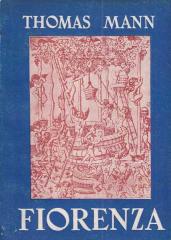
Fiorenza

Fiorenza

Mann
Thomas Mann

Thomas Mann’s *Fiorenza* is a historical drama set in Renaissance Florence that depicts the conflict between the preacher Girolamo Savonarola and Lorenzo de’ Medici, exploring the relationship between art, faith, and power.

Zora, 1955.
Kroatisch. Latein Schrift. Taschenbuch mit Einband.
6,42 €
Legende

Legende

Mann
Thomas Mann

Thomas Mann's *Legends* is a collection of three prose works inspired by myth, religion, and folklore. Through stories of love, identity, laws, and temptations, the author explores the contradictions of human nature.

Omladina, 1958.
Serbisch. Kyrillisch Schrift. Hardcover.
6,22 €
V.

V.

Thomas Pynchon

The novel represents a journey into an alternative world – a world that we all belong to from time to time, but of which we would not want to be a part, a world of paranoia and alienation that we are not entirely sure is just an alternative or the bare tr

Čarobna knjiga, 2010.
Serbisch. Latein Schrift. Taschenbuch.
21,9815,39 €
Rock Star

Rock Star

Jackie Collins

With the rhythm of rock'n'roll, Jackie Collins takes the reader behind the scenes of the world of fame and fortune, where three music stars — Kruger, Rafaella and Bobby — experience turbulent passions, betrayals and the struggle for success, while ambitio

Mladost, 1990.
Kroatisch. Latein Schrift. Fester Einband mit Schutzumschlag.
9,34 €
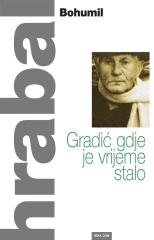
Gradić gdje je vrijeme stalo

Gradić gdje je vrijeme stalo

Bohumil Hrabal

Bohumil Hrabal, a Czech writer known for his lyrical grotesque and humor, in his novel The Town Where Time Stood Still evokes childhood in the small town of Libeň (part of Prague), where time seems to stand still in a magical but melancholic world.

Hena Com, 2006.
Kroatisch. Latein Schrift. Taschenbuch.
7,625,33 €
Kuća u kojoj stanuje vrag

Kuća u kojoj stanuje vrag

Goran Tribuson

In The House Where the Devil Dwells, Tribuson also thematizes the time of new poverty, crazy jokes on the way to earning money, usury, jealousy, revenge, strikes, and murders.

Znanje, 2006.
Kroatisch. Latein Schrift. Taschenbuch.
7,87 €