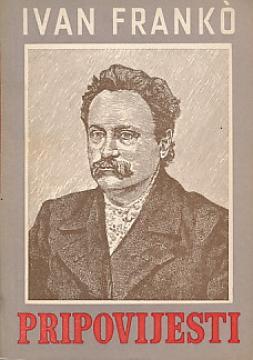
Pripovijesti

Pripovijesti

Ivan Franko

Contents: Bricklayer, Good earnings, Forests and pastures, Gypsies, On the light, Lady's bread, Note about the writer

Set in Galicia under Austrian rule in the late 19th century, the stories mock the poverty of peasants and workers, criticizing feudal exploitation, bureaucracy, and the loss of traditional rights. Franko, a doctor, journalist, and activist, calls for social justice and national awakening through realistic descriptions and profound characters.

  • The Bricklayer: Poor bricklayers, former peasants, come to the city looking for work, but encounter cruel employers and difficult conditions. The main character, an experienced craftsman, suffers from illness and exploitation, symbolizing the decline of the working class in urban chaos. The story ends tragically, emphasizing the helplessness of the common man.

  • Good Money: The peasant Mykyta goes to the city hoping for quick riches, but is deceived by speculators and landlords. Instead of making money, he ends up in debt and illness, returning to the village disappointed. Franko mocks the false promises of capitalism, showing how the poor remain victims.

  • Forests and Pastures: Old peasant Andriy Kritsky loses access to communal forests and pastures due to the enclosure of nobles and laws that favor large landowners. The story depicts the loss of natural resources and traditional life, leading to starvation and despair, criticizing the agrarian reform that protects the elite.

  • Gypsies: A Romani family arrives in the village, provoking prejudice and conflict with the local population. Through a story of love and betrayal within the Romani community, Franko explores the marginalization of minorities, the mixing of cultures, and racism, portraying the Gypsies as victims of social discrimination.

  • To the Light: A young intellectual or worker seeks the "light" of knowledge and truth in the darkness of ignorance and social injustice. He encounters bureaucracy and hypocrisy, but his journey symbolizes hope for enlightenment and the fight against the dark forces of feudalism.

  • Manorial Bread: A story of slave labor (panshchyna), where peasants work for "manorial bread" - a minimum payment from the nobles. Through characters suffering from hunger and humiliation, Franko denounces the feudal system, emphasizing that real bread comes only through free labor.

  • Author's Note: Franko's autobiographical essay about his work, his reflections on the role of literature in social struggle, and his inspiration from folk life.

Prevod
Roman Šovary
Urednik
Gustav Krklec
Dimenzije
17 x 12 cm
Broj strana
105
Izdavač
Zora, Zagreb, 1950.
 
Tiraž: 5.000 primeraka
 
Latinica. Broširano.
Jezik: Hrvatski.

Dva primerka su u ponudi

Primerak broj 1

Stanje:Korišćeno, u odličnom stanju
Dodato u korpu!

Primerak broj 2

Stanje:Korišćeno, u odličnom stanju
Dodato u korpu!
 

Zanima Vas i neka druga knjiga? Možete pretražiti našu ponudu pomoću pretrage ili prelistati knjige po kategorijama.

Možda će Vas zanimati i ovi naslovi

Karanfil s pjesnikova groba

Karanfil s pjesnikova groba

August Šenoa
Školska knjiga, 1982.
Hrvatski. Latinica. Broširano.
1,00 - 1,28
Svetlosti Rima

Svetlosti Rima

Alberto Moravia

Through these stories, Moravia explores themes of social inequality, the struggle for survival, and human frailty, portraying them with a mix of humor, irony, and realistic observation.

Svjetlost, 1965.
Srpski. Latinica. Broširano.
3,82 - 3,92
Ne tuguj bronzana stražo / Vuk bubalo: Sabrana djela Branka Ćopića #5

Ne tuguj bronzana stražo / Vuk bubalo: Sabrana djela Branka Ćopića #5

Branko Ćopić
Prosveta, 1964.
Srpski. Latinica. Tvrde korice.
3,52
Dela Borisa Pasternaka II: Zaštitna povelja i druge proze

Dela Borisa Pasternaka II: Zaštitna povelja i druge proze

Boris Pasternak
Slovo Ljubve, 1979.
Srpski. Latinica. Tvrde korice s omotom.
38,64 (komplet)
Najbolje ljubavne priče

Najbolje ljubavne priče

Eine Anthologie kurzer Liebesgeschichten aus der Weltliteratur, ausgewählt für ein breites Publikum im sozialistischen Jugoslawien. Hadžićs Auswahl zeichnet sich durch Qualität und Vielfalt aus und ist damit ein wertvolles Beispiel jugoslawischer Populärl

Novinarsko izdavačko poduzeće, 1961.
Hrvatski. Latinica. Broširano.
4,36 - 4,64
Sikamora

Sikamora

Goran Samardžić

„Sikamura“ ist eine Sammlung, die keine klaren Antworten liefert, sondern den Leser vielmehr zur Interpretation und Reflexion anregt, was sie im Kontext der zeitgenössischen Literatur anspruchsvoll, aber bedeutsam macht.

Bosanska knjiga, 1997.
Hrvatski. Latinica. Broširano.
5,984,49