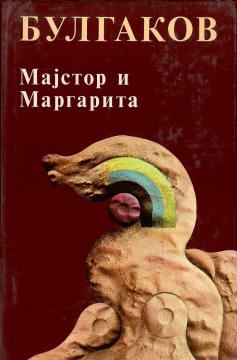
Majstor i Margarita
Retka knjiga

Majstor i Margarita

Mihail A. Bulgakov

"The Master and Margarita" is the masterpiece of the Russian writer Mikhail Bulgakov, one of the most famous and appreciated works of world literature. The novel was written in the thirties of the 20th century, but was published posthumously in 1966-1967.

The novel has three main narrative lines:

  • Visit of Woland and his entourage to Moscow: Woland, who is depicted as Satan, arrives in Moscow with a retinue of unusual helpers, including the witty and evil cat Behemoth, Azazel, Hella and Korovyev. Their appearance causes chaos, exposing the greed, hypocrisy and moral decadence of Soviet society.

  • The love story of the Master and Margarita: The master is a writer who wrote a novel about Pontius Pilate, but due to the pressure and criticism of the Soviet regime, he burned his work and retired from public life. Margarita, his lover, is ready to enter into an alliance with Woland in order to save him. Their love represents faith in art, passion and human freedom.

  • The story of Pontius Pilate and Yeshua Ha-Nozri: This is a "novel within a novel", the story of the fate of Yeshua Ha-Nozri (a character based on Jesus Christ) and his trial by Pontius Pilate. This line explores issues of conscience, power, responsibility and truth.

The novel questions the nature of good and evil, showing that the line between them is not always clear. Woland, though Satan, does not appear to be absolutely evil – his actions often have moral implications. Pontius Pilate symbolizes the struggle between personal conscience and political obedience. The novel is a satirical critique of bureaucracy, corruption, censorship and moral decay in Soviet Moscow. The love of the Master and Margarita shows how true feelings and artistic expression can overcome repression and persecution. Through the story of Pilate and Yeshua, Bulgakov raises the question of the immortality of the soul and freedom of choice.

The novel is layered, full of symbolism, allusions to literary and biblical texts. Bulgakov combines realism and fantasy, satire and philosophical depth, making the work unique. "The Master and Margarita" is often interpreted as a metaphor for artistic freedom and resistance to repression. The novel was banned during Bulgakov's lifetime because of its criticism of the Soviet regime. It has inspired numerous adaptations, including films, stage plays, operas and music.

Prevod
Milan Čolić, Nana Bogdanović
Urednik
Milivoje Jovanović, Milan Čolić
Dimenzije
21 x 14 cm
Broj strana
394
Izdavač
Srpska književna zadruga (SKZ), Beograd, 1985.
 
Ćirilica. Tvrde korice s omotom.
Jezik: Srpski.

Nema primeraka u ponudi

Poslednji primerak je nedavno prodat.
 

Zanima Vas i neka druga knjiga? Možete pretražiti našu ponudu pomoću pretrage ili prelistati knjige po kategorijama.

Možda će Vas zanimati i ovi naslovi

Moskva – Petuški

Moskva – Petuški

Venjedikt Jerofejev

Venedikt Yerofeyev's postmodern prose poem is today considered a classic of new Russian literature. It is compared to Gogol and Kharms for its poetics of absurdity, satire, and metaphysical depth.

LOM, 217.
Srpski. Ćirilica. Broširano.
11,24
Pisma iz progonstva / Zimske beleške o letnjim utiscima / Krotka

Pisma iz progonstva / Zimske beleške o letnjim utiscima / Krotka

Fjodor Mihajlovič Dostojevski

Fjodor Dostojevski, jedan od najvećih pisaca i vizionara u povijesti, predstavljen je u ovom izdanju izborom iz prepiske (Pisma iz progonstva), prikazom prvog svog putovanja po Europi (Zimske beleške o letnjim utiscima) i čuvenom novelom Krotka.

LOM, 2012.
Srpski. Ćirilica. Broširano.
6,745,06
Zlatno telešce

Zlatno telešce

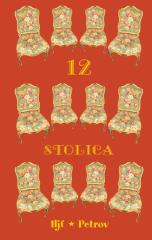
Ilja Iljf, Evgenij Petrov

The Golden Calf (1931) follows the ingenious con artist Ostap Bender, who in Soviet Russia during the first five-year plan seeks a secret millionaire in order to get rich, encountering the absurdity of bureaucracy, the new Soviet man, and his own downfall

Naklada Binoza, 1934.
Hrvatski. Latinica. Tvrde korice s omotom.
9,74
Džingis-kan

Džingis-kan

Vasilij Jan

Vasily Yan's novel Genghis Khan depicts the rise of the Mongol leader Temujin, from childhood in the steppes to the creation of the largest empire in the world, highlighting his courage, cruelty, and relentless will to power.

Rad, 1988.
Srpski. Latinica. Tvrde korice.
9,78
Sabrana djela A. P. Čehova #10: Drama bez naslova, Pisma

Sabrana djela A. P. Čehova #10: Drama bez naslova, Pisma

Anton Pavlovič Čehov

The story takes place on a country estate where a group of characters from different social classes gather, faced with boredom, unfulfilled ambitions, and emotional voids.

Zora, 1960.
Hrvatski. Latinica. Tvrde korice s omotom.
13,56
Sabrana djela A. P. Čehova #9: Tri sestre i druge drame

Sabrana djela A. P. Čehova #9: Tri sestre i druge drame

Anton Pavlovič Čehov

Since the play Three Sisters was written in the second half of the 19th century, it rightly carries with it certain motifs and an atmosphere that runs through most literary works of that period.

Zora, 1960.
Hrvatski. Latinica. Tvrde korice s omotom.
15,9812,78