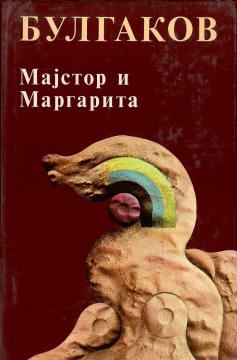
Majstor i Margarita
"The Master and Margarita" is the masterpiece of the Russian writer Mikhail Bulgakov, one of the most famous and appreciated works of world literature. The novel was written in the thirties of the 20th century, but was published posthumously in 1966-1967.
The novel has three main narrative lines:
Visit of Woland and his entourage to Moscow: Woland, who is depicted as Satan, arrives in Moscow with a retinue of unusual helpers, including the witty and evil cat Behemoth, Azazel, Hella and Korovyev. Their appearance causes chaos, exposing the greed, hypocrisy and moral decadence of Soviet society.
The love story of the Master and Margarita: The master is a writer who wrote a novel about Pontius Pilate, but due to the pressure and criticism of the Soviet regime, he burned his work and retired from public life. Margarita, his lover, is ready to enter into an alliance with Woland in order to save him. Their love represents faith in art, passion and human freedom.
The story of Pontius Pilate and Yeshua Ha-Nozri: This is a "novel within a novel", the story of the fate of Yeshua Ha-Nozri (a character based on Jesus Christ) and his trial by Pontius Pilate. This line explores issues of conscience, power, responsibility and truth.
The novel questions the nature of good and evil, showing that the line between them is not always clear. Woland, though Satan, does not appear to be absolutely evil – his actions often have moral implications. Pontius Pilate symbolizes the struggle between personal conscience and political obedience. The novel is a satirical critique of bureaucracy, corruption, censorship and moral decay in Soviet Moscow. The love of the Master and Margarita shows how true feelings and artistic expression can overcome repression and persecution. Through the story of Pilate and Yeshua, Bulgakov raises the question of the immortality of the soul and freedom of choice.
The novel is layered, full of symbolism, allusions to literary and biblical texts. Bulgakov combines realism and fantasy, satire and philosophical depth, making the work unique. "The Master and Margarita" is often interpreted as a metaphor for artistic freedom and resistance to repression. The novel was banned during Bulgakov's lifetime because of its criticism of the Soviet regime. It has inspired numerous adaptations, including films, stage plays, operas and music.
No copies available
The last copy was sold recently.