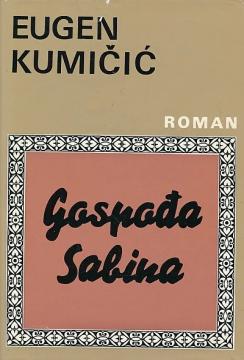
Gospođa Sabina

Gospođa Sabina

Eugen Kumičić

"Ms. Sabina" is a novel by Eugen Kumičić published in 1979 that explores complex interpersonal relationships and social norms in Croatia in the late 19th and early 20th centuries.

The main character, Sabina, is a young and ambitious woman who faces the challenges of a traditional society that limits her possibilities. Through her relationships with various characters, including family, friends, and love interests, the novel depicts the struggle for personal freedom and identity.

Kumičić uses Sabina's story to explore themes of love, passion, betrayal, and social expectations. At the heart of the plot is her need for independence and resistance to conventional norms, which reflects the broader social changes of the time. Through rich descriptions and emotional dialogue, the author creates a deep psychological analysis of the characters, introducing the reader to the complex dynamics of human relationships and internal struggles. The novel "Mrs. Sabina" remains relevant today, raising questions about individual identity and freedom.

Dimenzije
20 x 14 cm
Broj strana
259
Izdavač
Mladost, Zagreb, 1979.
 
Latinica. Tvrde korice s omotom.
Jezik: Hrvatski.

Jedan primerak je u ponudi

Stanje:Nekorišćeno
Dodato u korpu!
 

Zanima Vas i neka druga knjiga? Možete pretražiti našu ponudu pomoću pretrage ili prelistati knjige po kategorijama.

Možda će Vas zanimati i ovi naslovi

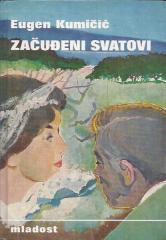
Začuđeni svatovi

Začuđeni svatovi

Eugen Kumičić
Mladost, 1979.
Hrvatski. Latinica. Broširano.
2,98 - 2,99
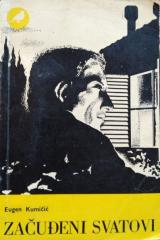
Začuđeni svatovi

Začuđeni svatovi

Eugen Kumičić
Zora, 1963.
Hrvatski. Latinica. Broširano.
1,98
Urota Zrinsko-Frankopanska

Urota Zrinsko-Frankopanska

Eugen Kumičić

The novel "The Zrinjski-Frankopan Conspiracy" (1893) was the most widely read Croatian book for ten years, and, thanks to the interest of readers at the time in historical events, it had a huge influence on younger generations of readers.

Matica hrvatska, 1965.
Hrvatski. Latinica. Tvrde korice.
8,56 - 10,84
Izabrane komedije: Tartuffe / Mizantrop

Izabrane komedije: Tartuffe / Mizantrop

Jean-Baptiste Poquelin Molière
Matica hrvatska, 1942.
Hrvatski. Latinica. Tvrde korice.
16,52
Figarova ženidba ili Ludi dan: Komedija u pet činova

Figarova ženidba ili Ludi dan: Komedija u pet činova

Pierre-Augustin Caron de Beaumarchais

The comedy "The Marriage of Figaro, or The Mad Day" (1784) is a sequel to The Barber of Seville. The Marriage of Figaro criticizes social injustices through love affairs and intrigue, celebrating Figaro and Susanna's ingenuity in the fight against aristoc

Srpska književna zadruga (SKZ), 1925.
Srpski. Ćirilica. Tvrde korice.
7,586,06
Sve je dobro što se dobro svrši

Sve je dobro što se dobro svrši

William Shakespeare

All's well that ends well belongs to Shakespeare's so-called "black" or "problematic" comedies.

Nakladni zavod Matice hrvatske, 1977.
Hrvatski. Latinica. Tvrde korice s omotom.
5,32