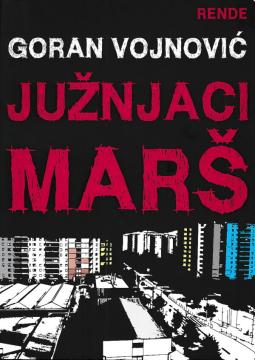
Južnjaci marš

Južnjaci marš

Fužine is a settlement in Ljubljana, very similar to the blocks in New Belgrade, built during the socialist era for workers from the south of the SFRY who still do not have minority rights.

In the meantime, this neighborhood has become a ghetto ruled by criminals, turbo-folk music and jibbers. "Fuzine is like an Olympic village, because everyone wears tracksuits and speaks a different language. No one fucks anyone even five percent." The main character of the novel, Marko Đorđić, the seventeen-year-old son of Bosnian Serb emigrants and a talented basketball player with an identity crisis, one evening makes a rash decision to leave basketball to try to be what he wants, not what he is. "Maybe I'm not talented at your Slovenian, but maybe I'm talented at something else, you just haven't bothered to find out what it is. Every man is certainly talented at something." But a man's origin is sometimes stronger than himself, so Marko survives a series of unpleasant events (drunkenness, demolishing a bus, arrest, etc.), and on the orders of his father, he goes to Bosnia, the homeland of his ancestors, for "re-education"... The Slovenian police tried to "discipline" the writer Goran Vojinović and sued him for defamation due to the bad representation of policemen in the novel (which, among other things, Vojnović derogatorily calls cops, gendarmes, guards, dustmen)! After pressure from the public, art organizations and the Slovenian Minister of the Interior, the police withdrew the criminal prosecution.

Original title
Čefurji raus
Translation
Ana Ristović
Editor
Slađana Novaković
Illustrations
Barbara Culiberg
Graphics design
Branko Đukanović
Dimensions
20 x 14.5 cm
Pages
196
Publisher
Rende, Beograd, 2008.
 
Distribution: 500 copies
 
Latin alphabet. Paperback.
Language: Serbian.

One copy is available

Condition:Used, excellent condition
Discounted price: 8.326.24
25% discount is valid until 5/1/26 11:59 pm
 

Are you interested in another book? You can search the offer using our search engine or browse books by category.

You may also be interested in these titles

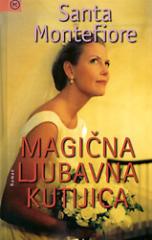
Magična ljubavna kutijica

Magična ljubavna kutijica

Santa Montefiore

The Magic Love Box (2002) follows the life story of Federica Campione, which begins in Vina del Mar, Chile, in the summer of 1982. Montefiore creates an epic story of growth, where the magic is not only in the box, but in the courage to let go of the past

Mozaik knjiga, 2006.
Croatian. Latin alphabet. Hardcover.
7.34
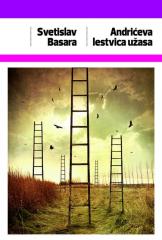
Andrićeva lestvica užasa

Andrićeva lestvica užasa

Svetislav Basara

A Serbian writer known for his satirical novels, Andrić's Ladder of Horrors dissects the Balkan mentality through a parable of Yugo-nostalgia and national myths. The title alludes to Ivo Andrić as a litmus test for criticism – Balkans claim him or reject

24 sata, 2021.
Serbian. Latin alphabet. Paperback.
11.56
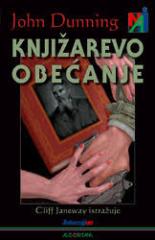
Knjižarevo obećanje: Cliff Janeway istražuje

Knjižarevo obećanje: Cliff Janeway istražuje

John Dunning

The Bookseller's Promise is the third book in the Cliff Janeway series by the award-winning John Dunning, an unusually talented and unique American writer.

Algoritam, 2006.
Croatian. Latin alphabet. Paperback.
4.50 - 4.68
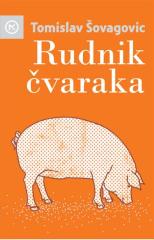
Rudnik čvaraka

Rudnik čvaraka

Tomislav Šovagović

The debut work of Croatian writer Tomislav Šovagović, awarded the Josip and Ivan Kozarac Award in 2012, is a dedication to Slavonia – the region of his childhood that the author, born in Dalmatia, observes with foreign but tender eyes.

Mozaik knjiga, 20112.
Croatian. Latin alphabet. Paperback.
11.56
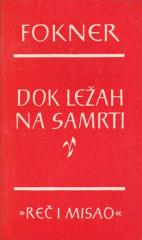
Dok ležah na samrti

Dok ležah na samrti

William Faulkner

Faulkner's 1930 novel, a classic example of modernist literature. It is often compared to Joyce's "Ulysses" for its innovative structure, but is more accessible due to its focus on family.

Rad, 1985.
Croatian. Latin alphabet. Paperback.
3.26
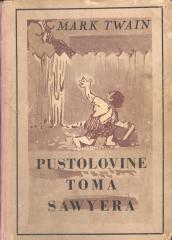
Pustolovine Toma Sawyera

Pustolovine Toma Sawyera

Mark Twain

The Adventures of Tom Sawyer is the first truly realistic children's novel, not only in American but also in world children's literature. Twain's most famous work and a favorite children's book in which the writer described his boyhood experiences.

Nakladni zavod Hrvatske, 1947.
Croatian. Latin alphabet. Hardcover.
16.32